Beyond the Bin
The Beyond the Bin Program focuses on creating and supporting waste reduction initiatives to benefit Tacoma’s residents, environment, and local economy. Tacoma generates about 378,000 tons of waste every year, with 55 percent of this material being recycled or composted, and the remaining 165,000 tons being buried in a landfill. While the City has made great strides in recycling and composting, many useful items still end up in our landfill every day. Beyond the Bin is Tacoma’s approach to extending the life of our stuff through reusing, repairing, repurposing, and sharing as many valuable items as possible.
Our Mission:
- Increase access to resources and networks that allow for greater participation in waste reduction activities.
- Explore new and innovative opportunities to keep valuable, reusable materials out of the landfill.
- Provide support for community organizations that are leading in waste reduction.
- Enhance our local economy by encouraging circularity, over extraction and disposal.
How Can You Go Beyond the Bin?
Visit a Free Community Donation Event
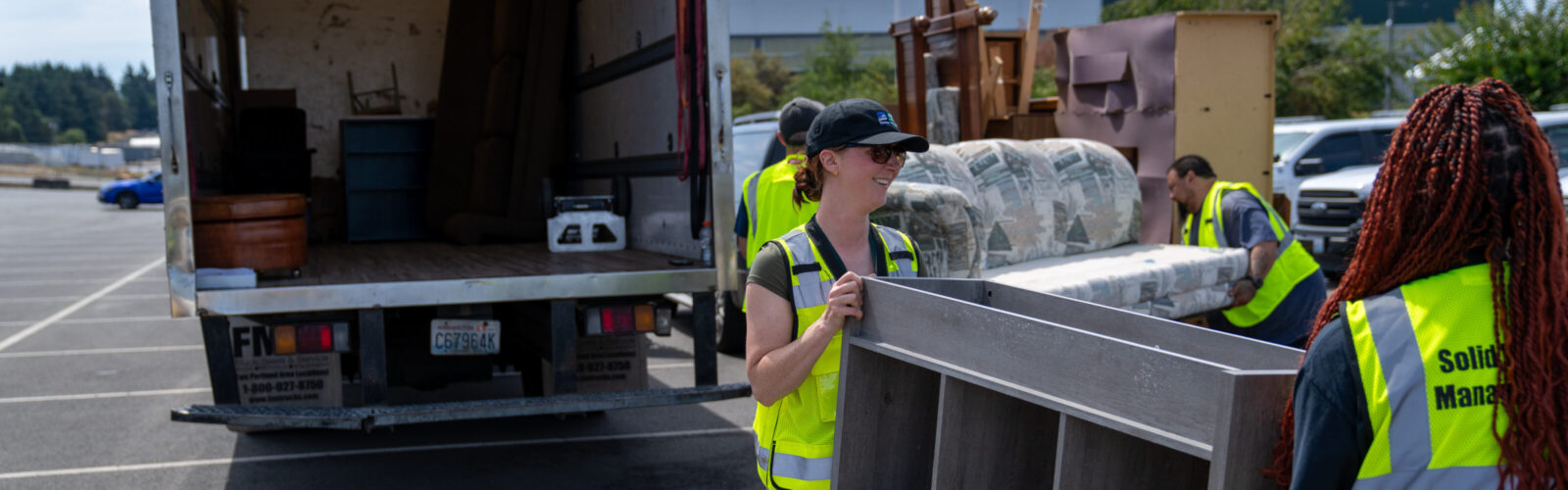
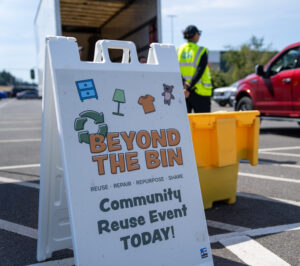 Looking to clear out clutter without filling up the landfill? Bring your usable items to a weekly Beyond the Bin Community Donation Event at the Tacoma Recovery & Transfer Center and donate them to local nonprofit partners who will reuse, repurpose, and redistribute them back into the community. It’s a simple way to reduce waste, support neighbors, and keep valuable materials in use and out of the landfill.
Stop by…
Tacoma Recovery & Transfer Center Events
On Fridays we reuse at the Tacoma Recovery & Transfer Center!
Community Donation Events will be held weekly on Fridays, from April through September 2026. Events will run from 9 a.m. to 4 p.m. or until the collection truck is full. We reserve the right to cancel events for any reason.
Save a spot and help us manage capacity by registering before you come! Register here.
Mobile Events: Beyond the Bin to You
City of Tacoma’s Solid Waste Management team is excited to introduce… Beyond the Bin to you! During the 2026 season, Beyond the Bin will host mobile events throughout Tacoma neighborhoods. These events bring options to donate and reuse closer to home. Check the events calendar above for more information.
Join us on social!
You can also follow and RSVP to our events on the Tacoma Environmental Services Facebook page.
What Can You Bring?
The items we accept change, depending on which organization we’re partnering with for each event. Please review our event calendar and our partner’s accepted items lists below before attending Beyond the Bin events.
- 1st & 3rd Fridays: Clothing & small household goods
- 2nd & 4th Fridays: Furniture
- Friday, May 29 & July 31: Building materials & tools
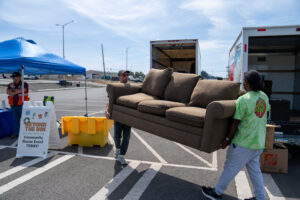
Items are accepted on a first-come, first-served basis. Events will end once collection trucks are full. We reserve the right to decline items for any reason, including condition, size, demand, market value, or seasonality. Oversized, hazardous, damaged, or non-accepted items will not be accepted. Participants are responsible for safe disposal of declined items.
For more information on options for recycling and safe disposal, see our Tacoma Recovery and Transfer Center Facility Guide.
For information regarding Solid Waste rates, including self-haul disposal rates, click here.
Accepted Items
-
Accepted Items: Goodwill – Olympics & Rainier Region
Collecting: Clothing & small household items
Items are accepted on a first-come, first-served basis. Events will end once collection trucks are full. No commercial drop-offs. Oversized, contaminated, damaged, or non-accepted items will not be accepted.
Accepted itemsExamples of items Goodwill accepts include:
- Clothing and shoes
- Linens and bedding
- Small household appliances
- Dishes, utensils, pots and pans
- CDs, DVDs and records
- Art and collectibles
- Small antiques
- Sporting goods
- Luggage
- Books
- Toys
- Tools
Please note: the items we accept are subject to change, depending on which organization we’re partnering with for each event. Please review our event calendar and our partner’s accepted items list before attending Beyond the Bin events.
-
Accepted Items – Habitat for Humanity: Tacoma/Pierce County
Collecting: Furniture
Items are accepted on a first-come, first-served basis. Events will end once collection trucks are full. No commercial drop-offs. Oversized, contaminated, damaged, or non-accepted items will not be accepted.
Accepted itemsExamples of items Habitat for Humanity accepts include:
- Dressers
- Bookcases
- Sofas
- Recliners
- Desks
- Tables
- Chairs
- Lamps
- Small household appliances
- Dishes, utensils, pots and pans
- Art and home decor
- Tools
Please note: the items we accept are subject to change, depending on which organization we’re partnering with for each event. Please review our event calendar and our partner’s accepted items list before attending Beyond the Bin events.
-
Accepted Items – Northwest Center
Collecting: Clothing & small household items
Items are accepted on a first-come, first-served basis. Events will end once collection trucks are full. No commercial drop-offs. Oversized, contaminated, damaged, or non-accepted items will not be accepted.
Accepted itemsExamples of items Northwest Center accepts include:
- Clothing and shoes
- Linens and bedding
- Small household appliances
- Dishes, utensils, pots and pans
- CDs, DVDs and records
- Art and collectibles
- Small antiques
- Sporting goods
- Luggage
- Books
- Toys
- Tools
Please note: the items we accept are subject to change, depending on which organization we’re partnering with for each event. Please review our event calendar and our partner’s accepted items list before attending Beyond the Bin events.
-
Accepted Items – Northwest Furniture Bank
Collecting: Furniture
Items are accepted on a first-come, first-served basis. Events will end once collection trucks are full. No commercial drop-offs. Oversized, contaminated, damaged, or non-accepted items will not be accepted.
Accepted itemsExamples of items Northwest Furniture Bank accepts include:
- Dressers
- Bookcases
- Sofas
- Recliners
- Desks
- Tables
- Chairs
- Lamps
- Small household appliances
- Dishes, utensils, pots and pans
- Art and home decor
- Tools
Please note: the items we accept are subject to change, depending on which organization we’re partnering with for each event. Please review our event calendar and our partner’s accepted items list before attending Beyond the Bin events.
-
Accepted Items – Second Use
Collecting: Building materials & tools
Items are accepted on a first-come, first-served basis. Events will end once collection trucks are full. No commercial drop-offs. Oversized, contaminated, damaged, or non-accepted items will not be accepted.
Accepted itemsExamples of items Second Use accepts include:
- Wood Materials – see full list here
- Doors – interieor/exterior
- Windows – vinyl, wood, aluminum-clad
- Lighting (no fluorescent or halogen)
- Lumber – 6ft or longer, free of hardware
- Cabinets & Hardware
- Tools – in good working order
- Furniture – high-quality seating, tables, dressers, framed mirrors
Please note: the items we accept are subject to change, depending on which organization we’re partnering with for each event. Please review our event calendar and our partner’s accepted items list before attending Beyond the Bin events.
Beyond the Bin Community Grants
Are you part of an organization that is leading the Tacoma community in waste reduction efforts? Do you have a waste reduction project idea, but need funding to make it a reality? Apply for a Beyond the Bin Community Grant!
The grant application period is now closed. We hope to offer additional grant opportunities in the future!
-
Are you part of an organization that is leading the Tacoma community in waste reduction efforts? Do you have a waste reduction project idea, but need funding to make it a reality? Apply for a Beyond the Bin Community Grant!
In 2026, City of Tacoma’s Solid Waste Management (SWM) division will offer up to three Beyond the Bin Community Grant awards of $10,000 to $15,000 for eligible waste reduction projects occurring within Tacoma city limits.
Applications open January 30 and close February 28 at 11:59 p.m.
Strong grant applications will demonstrate benefits that:
- Implement waste reduction practices such as reusing, repairing, repurposing, or sharing;
- Improve community quality of life by supporting social well-being and affordability; and
- Promote a clean, safe, and livable environment.
Additional information:
- Applications that also benefit our local economy, support social equity, and address the causes or impacts of climate change will be given special consideration.
- Projects that help educate residents and/or businesses on the environment and sustainable, waste reduction practices are encouraged to apply.
- Collaboration with other groups, organizations, and agencies is not required but is highly encouraged. First time applicants may also be given preference.
- Only not-for-profit organizations are eligible to apply.
- For-profit businesses are ineligible to apply.
Questions?
Phone: (253) 502-2100Email: kwaind@tacoma.gov -
Submission Instructions:
- Review grant requirements and Frequently Asked Questions.
- Complete the Beyond the Bin Community Grant Application Form
- Email completed application to kwaind@tacoma.gov with the subject line “Beyond the Bin Community Grant Application” by February 28, 2026 at 11:59 p.m.
Awards will be announced on or before April 1, 2026.
Send completed applications to:
Email: kwaind@tacoma.gov -
For questions or more information, email kwaind@tacoma.gov or call (253) 502-2100.
Additional information:
-
2026 Grant Awardees
We’re proud to announce the awardees of the 2026 Beyond the Bin Community Grant Program.
Second Cycle
Second Cycle will host free weekly Fix-It-Fest bicycle repair workshops and expand its ability to recover, repair, and reuse bicycles. This project will keep thousands of pounds of materials out of the landfill while increasing access to affordable, reliable transportation and hands-on skill-building opportunities for Tacoma residents.Making a Difference Foundation
This project focuses on food rescue and gleaning to prevent edible food from going to waste. By redirecting surplus food, the program will reduce methane emissions, support climate goals, and increase access to free, culturally relevant, nutritious food for underserved communities.South End Neighborhood Council
SENCO will host a large-scale clothing and household goods swap at its annual block party and develop a year-round system for sharing reusable items. This effort will support a neighborhood-based reuse system, reduce waste, and improve access to essential goods for South End residents.These projects reflect Tacoma’s commitment to practical, community-driven solutions that reduce waste, support neighbors, and keep valuable materials in circulation.
How are we doing?
We want your feedback! How can our community reuse more stuff, save more money, and make less waste? Complete our quick survey to share your thoughts.
Take Survey