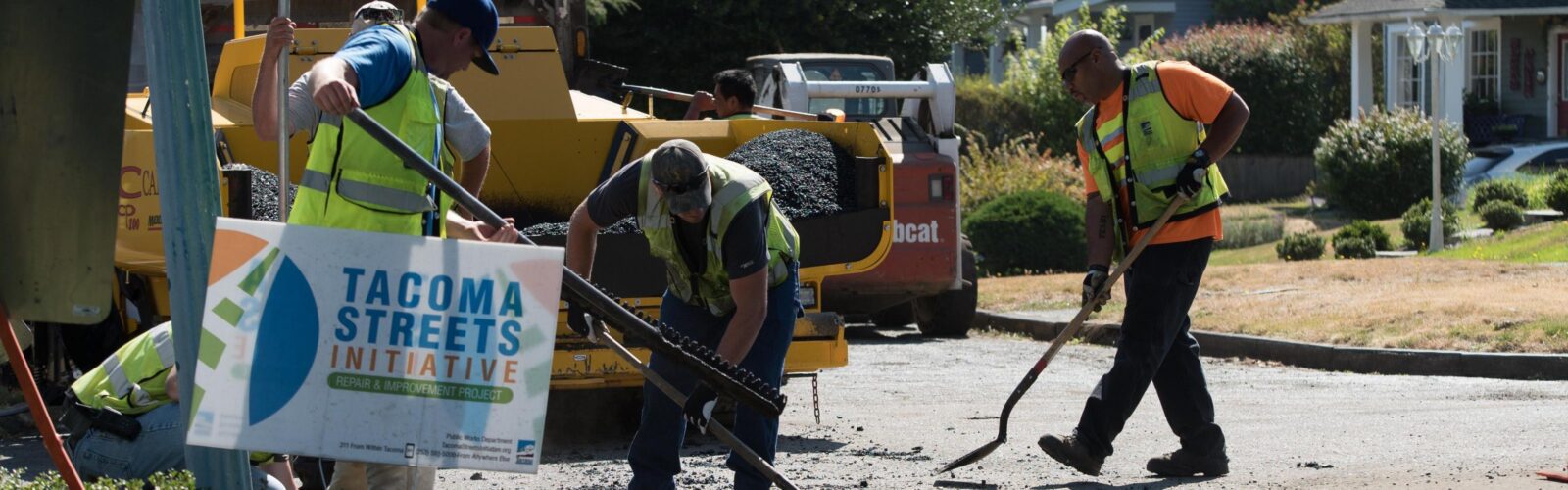
Tacoma Streets Initiative (2015-2025)
The Tacoma Streets Initiative was a voter-approved funding program adopted in 2015 to address street maintenance and repair needs across Tacoma. The initiative provided dedicated funding for residential street repairs, arterial improvements, and safety upgrades throughout the City.
Over the past decade, the initiative funded a wide range of projects including paving, preventative maintenance, sidewalk improvements, and accessibility upgrades.
Background
The 10-year, $325 million voter-approved Tacoma Streets Initiative provided funding for residential street maintenance, arterial street improvements, ADA accessibility upgrades, and pedestrian and bicycle safety improvements. This levy was approved by voters in November 2015 and expired December 31, 2025.
The levy provided roughly 20% of the City’s transportation budget with a total value with matching grant dollars of $401 million. This levy aimed to take care of the basics, while also investing in the future with improvements to move people and goods in and around a growing Tacoma.
View the Tacoma Streets Initiative playlist for a library of videos related to the initiative including explanation videos on Preventative Maintenance, Overlay, and Surface Treatment.
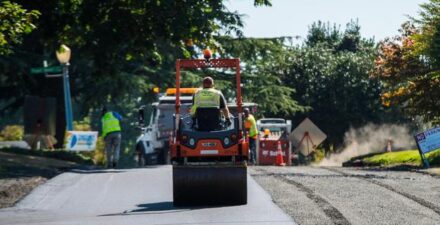
95
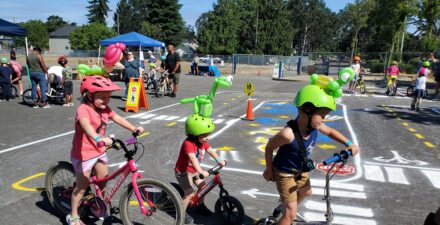
9
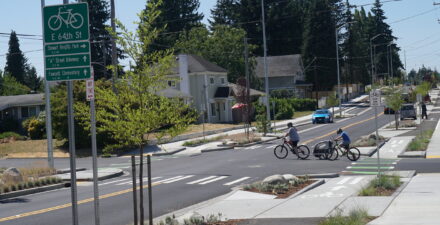
3,566

245
77
48
Tacoma Streets Initiative
2015 Voter Approved Funding Measures
-
Funding:
-
$0.20 per $1,000 of assessed property value
-
1.5% Gross Earnings Tax (GET) on natural gas, electric, and phone utilities
Purpose:
Proposition 3 (Resolution 39249) supported street repair, maintenance, and safety improvements across Tacoma, including residential streets, arterial roadways, and freight routes.Examples of funded work include:
-
Street resurfacing and pavement repair
-
Pothole repair
-
Residential street maintenance
-
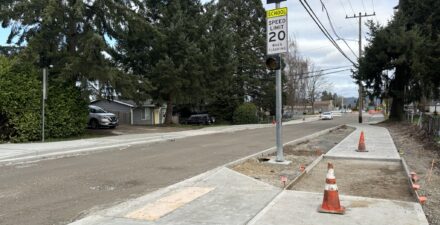
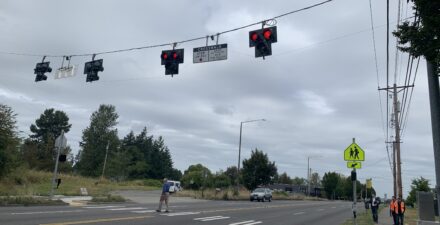
Pedestrian safety improvements
-
School crossing beacons
-
Sidewalk improvements
-
-
Funding:
0.1% local sales and use taxPurpose:
Proposition A (Resolution TBD010) funded transportation improvements through Tacoma’s Comprehensive Transportation Improvement Program. These investments support the maintenance and improvement of the city’s transportation system, including residential streets, arterials, freight routes, and bicycle and pedestrian facilities.Examples of funded work include:
- Pothole repair
- Street resurfacing and pavement preservation
- Arterial and freight corridor improvements
- School crossing beacons
- Sidewalk construction and pedestrian improvements
- Bicycle mobility improvements
Renewal
On December 3, 2024, the Board of the Tacoma Transportation Benefit District approved Resolution No. TBD 023 to replace and reimpose the 0.1% sales and use tax beginning April 1, 2026. This action replaces the voter-approved tax adopted in 2015 as it expires and allows the City to continue funding transportation maintenance and safety improvements without increasing the tax rate.
Safety Investment
Under the renewed tax, at least 15% of revenue will be dedicated to safety improvements, including sidewalks, street lighting, and crossing improvements.
-
The initiative also leveraged additional funding to increase the impact of local investments. The voter-approved measures were expected to leverage approximately $120 million in grants and matching funds, along with an additional $30 million committed by the City of Tacoma.
As of 2026, the Streets Initiative has garnered more than $144 million in grant and matching funds.
Projects and Annual Reports
-
In general, work is categorized as Street Maintenance or Capital Projects. Tacoma Streets Initiative revenue funded street repair and maintenance, safety improvements on residential and arterial streets, freight access roads, pothole repair, bike and pedestrian projects, and school zone safety enhancements.
Street Maintenance – Funds allocated to Street Maintenance went towards activities that are intended to extend the life of a street or rehabilitate the street. With the proper maintenance, the City can extend the useful life of a street for the lowest cost. Typical treatments include:
- Surface Treatment – A layer of hot liquid asphalt is laid down, followed by a layer of gravel that is then rolled into the asphalt. This treatment is used on streets that are showing signs of wear and is used to seal and even out cracks to provide a smoother surface.
- Preventative Maintenance – Cracks in the street are cleaned and filled with an elastic rubber-based material to prevent moisture penetration. This category could also include concrete panel replacement or asphalt repair on some streets.
- Overlay – The existing street surface is ground down, and a two to three-inch layer of asphalt is laid down. Overlays are performed on streets that have outlived their usable life, and when they typically require continuous pothole repairs.
Capital Projects – Funds allocated for capital projects went towards projects that added facilities to the transportation network or reconstructed existing transportation facilities. Capital Projects are generally more labor-intensive and more expensive than maintenance. When money is spent on Capital Projects, the City can compete for Federal, State, and Local grants that help leverage local funds. Capital Projects could include things like:
- Major improvements to arterial streets, bridges, and freight access roads.
- Construction of sidewalks, ADA ramps, pedestrian and bike paths.
- Installation of new traffic signals and pedestrian crossing infrastructure.
For a list of active Capital Projects, visit the Capital Projects web page.
-

Every year, the Public Works Department will submit a progress report to detail the projects completed as a part of that year’s Streets Initiative Work Plan. View the previous year’s progress reports:
- 2025 Progress Report
- 2024 Progress Report
- 2023 Progress Report
- 2022 Progress Report
- 2021 Progress Report
- 2019-2020 Progress Report
- 2018 Progress Report
- 2017 Progress Report
- 2016 Progress Report
Future capital projects will be identified through adopted plans that guide investment in transportation infrastructure. These plans include:
Street Maintenance Projects are guided by data on pavement condition scores which can be found on this map and by coordinating with underground utilities to maximize our investment.