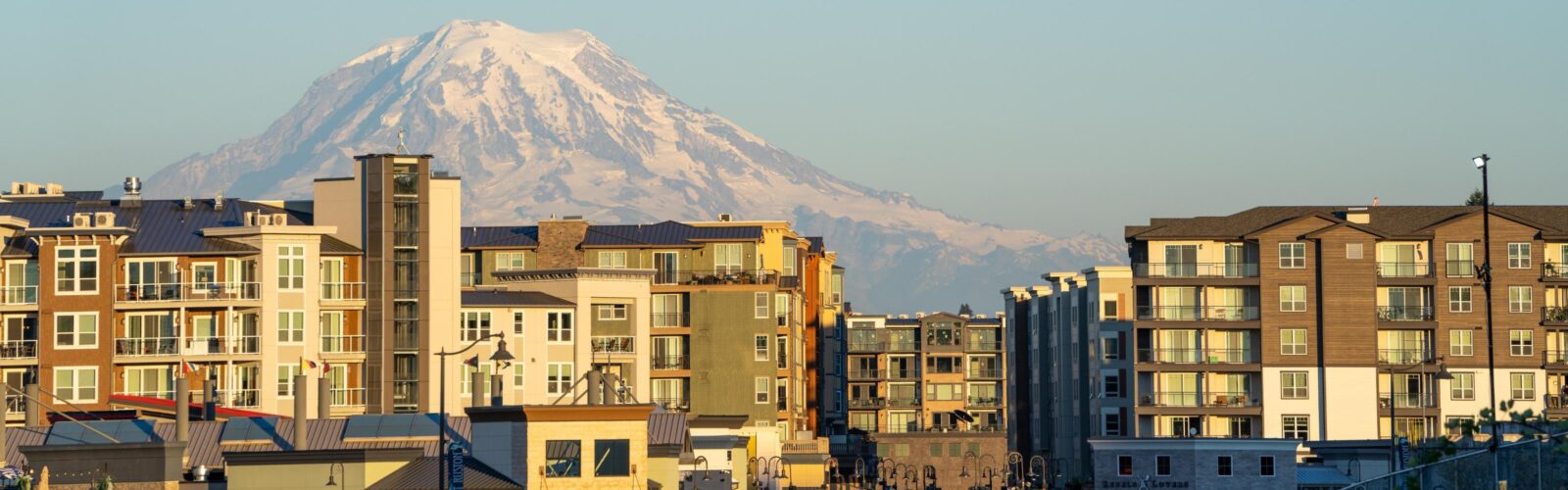
Point Ruston with Mount Rainier in the background

Regulatory Compliance aspires to create a safe, clean, livable environment for the residents of Tacoma through fair and consistent enforcement of the Tacoma Municipal Code. We are committed to an education-first approach that prioritizes voluntary compliance.

Regulatory Compliance Overview

Regulatory Compliance is divided into two main parts:

  • Permit Compliance
  • Code Compliance

Each part has different responsibilities based on the Tacoma Municipal Code (TMC). Regulatory Compliance only enforces the TMC rules. It does not enforce outside rules unless the TMC clearly includes them.

Compliance, Permitting, and City Resources

Permit Compliance handles reports about:

  • Building or construction work done without a permit
  • Work in protected environmental areas (called critical areas)
  • Dangerous or hazardous trees
  • Cutting, removing, or trimming street trees without a permit

If someone does construction in Tacoma without a required permit, and the work is not exempt, Permit Compliance works with the property owner to fix the issue. This usually means helping them apply for the correct permit after the work has already started.

City rules that require permits are listed in several sections of the Tacoma Municipal Code, including TMC 2.01.050.K, TMC 2.19.030.B.1, TMC 2.22.030.A, TMC 9.08.020.A, TMC 9.20.210–230, and TMC 13.11.140.


When a tree in a public area (like a street or sidewalk right-of-way) is removed, planted, or trimmed without a permit, Permit Compliance works with the responsible person to fix the issue. This may include:

  • Getting the proper permit
  • Planting new trees to replace lost ones
  • Restoring the site if needed

The Permit Compliance team also includes a certified tree expert (an ISA Master Arborist). This expert:

  • Reviews tree permit applications
  • Investigates reports of possibly dangerous trees
  • Helps decide if a tree is unsafe

Code Compliance enforces three main city rules:

  • Noise rules (Noise Ordinance – TMC 8.122)
  • Property upkeep rules (Nuisance Code – TMC 8.30)
  • Building safety rules (Minimum Building and Structures Code – TMC 2.01)

For animal-related issues, people can also file a report using See-Click-Fix under the “Animal Issue” category.


Nuisance Code

The Nuisance Code defines a “nuisance” as something a property owner does not fix or allows to happen that can harm public health, safety, or the community.

Examples of nuisances include:

  • Trash covering a property
  • Overgrown grass or plants
  • Abandoned appliances or junk

Property owners are required to keep their property clean and in safe condition.


Minimum Building and Structures Code

This code is used to decide if a building or property is unsafe or in poor condition.

Inspectors give “points” based on problems they find. Different problems have different point values.

For example:

  • Broken sewer system = 25 points
  • Mold or mildew inside a building = 10 points

Buildings are classified based on total points:

  • Non-standard: 25–49 points
  • Substandard: 50 or more points
  • Derelict building: Has serious problems listed in the code

Future Change

In 2026, the City plans to replace this system with a new rule called the International Property Maintenance Code (IPMC). When that happens, these rules will be updated.

How are trees regulated?

Trees in Tacoma are regulated by the Urban Forestry Code (Chapter 9.20 of the Tacoma Municipal Code). This code sets rules for trees in public areas like streets and sidewalks.

It covers:

  • Planting trees
  • Pruning trees (trimming)
  • Removing trees

The current rules went into effect on June 1, 2024.


Tree permits (RTRE permit)

Before doing any tree work in a public right-of-way, a property owner or contractor must get a Right-of-Way Tree Permit (RTRE permit).

This includes work such as:

  • Removing street trees
  • Pruning street trees
  • Planting street trees

Important:

  • A permit is required before any work begins
  • The City does not issue these permits for trees on City-owned property

Other tree regulations

Street trees are also protected under the Land Use Code.

This code requires street trees to be:

  • Healthy
  • Safe
  • Properly maintained

The Urban Forestry Manual provides details on how these requirements are met, and can be viewed here https://tacoma.gov/government/departments/environmental-services/urban-forestry/urban-forestry-code-policy-and-manuals/


Private property tree rules

Some rules also apply to trees on private property, especially during development projects. These rules may:

  • Require certain trees to be preserved
  • Charge a Canopy Loss Fee when larger trees are removed (trees over 6 inches in diameter)

As of June 2025:

  • The fee is $130 per inch of tree diameter removed

More information is available in:


Reporting tree issues

Residents can report:

  • Dead or hazardous trees
  • Trees removed without a permit
  • Trees pruned without a permit
  • Trees planted without a permit

Reports can be submitted through the City’s reporting system.


How hazardous trees are handled

The Permit Compliance team includes a certified tree expert called a Master Arborist (certified by the International Society of Arboriculture).


Step 1: Case review

When a report is received, staff:

  • Open a case file
  • Check permits and past violations
  • Review property records and maps

Step 2: Site visit

The Master Arborist visits the site and evaluates the tree, including:

  • Size and height
  • Location
  • Tree species
  • Signs of disease, pests, or damage
  • Soil and environmental conditions

This information is recorded in a formal Tree Risk Assessment.


If a tree is hazardous

If a tree is found to be unsafe, the City sends a Hazardous Tree Notice to the property owner next to the tree.

The notice explains:

  • The tree is a safety risk
  • The adjacent property owner is responsible for addressing it
  • The issue must usually be fixed within 30 days

Fixes may include pruning or removing the tree.


Assistance for property owners

The Environmental Services Department offers the Hazardous Tree Assistance Program to help eligible property owners.

You may qualify if you:

  • Are enrolled in or eligible for utility payment assistance, or
  • Live in a “Moderate,” “Low,” or “Very Low” opportunity area (based on the Tacoma Equity Index)

Contact information

For questions or more information:

How do customers file a complaint?

Most Regulatory Compliance cases start when someone files a complaint. The City receives over 200 complaints each week through different reporting systems, and the City works to respond as quickly as possible, depending on available staff and resources.


How to file a complaint

Most complaints are submitted through See-Click-Fix, which is part of the City’s Tacoma FIRST 311 program. This system is available online and as a mobile app.

See-Click-Fix allows people to:

  • Send complaints in one place
  • Attach photos
  • Share exact locations on a map
  • Send reports to the right City staff

People are encouraged to include as much detail as possible.

You can also access the service here:
https://tacoma.gov/services/tacoma-first-311-services/


What happens after a complaint is received?

When the City receives a complaint:

  1. Staff record the information, including the address, description, and photos
  2. An Inspector reviews the case
  3. The Inspector checks for possible violations of City code

If a violation can be seen from a public area (like a street or sidewalk), the City may take enforcement action.

If no violation is found, the case is closed.

Because the City receives many complaints, most responses are short and use standard wording to explain whether a violation was found.


Privacy and inspections

City staff must follow privacy laws when investigating complaints.

  • Most inspections are done from public areas only
  • Inspectors cannot enter private property without permission
  • Entry is only allowed if the owner or tenant gives permission

What happens if a violation is found?

If an Inspector confirms a violation of City rules, the City begins enforcement steps.

Different rules may have different processes, but most use the Uniform Enforcement Code (UEC) (TMC 1.82). This code explains:

  • Warning and notice steps
  • Penalties
  • Appeals
  • Stop-work orders

Some rules, like noise or environmental protections, have their own special processes.


First step: Education and correction

The City usually starts with a Request for Voluntary Correction (RVC).

This is not a legal penalty. It is a request asking the property owner to fix the problem.

  • The owner is usually given 60 days to correct the issue

If the problem is not fixed, the City may issue a Notice of Violation and Compliance Order.

If work is still happening, a Stop Work Order may also be issued.


How long to fix a violation?

Time limits depend on the situation:

  • Most permit issues: about 60–90 days total
  • Hazardous trees or illegal right-of-way use: usually 30 days

If the issue is not fixed in time, the City may start charging fines.

The City may allow more or less time depending on:

  • Public safety risk
  • How serious the violation is
  • How much work is needed to fix it

Due process and fairness

The City must follow “due process.” This means:

  • Property owners must have fair time to respond
  • They must be able to fix the issue or appeal
  • The process must be fair and consistent

Even if someone reports a problem, property owners are still given time to respond before penalties are issued.


Can a property owner appeal?

Yes. If a property owner receives a Notice of Violation, they can appeal.

Appeals go to the Office of the Hearing Examiner, an independent decision-maker.


Appeal rules

  • Appeals must be filed within 10 calendar days
  • The appeal must explain why the decision was incorrect (facts or law)
  • If no appeal is filed in time, the decision becomes final

This deadline cannot be extended.


How hearings work

Hearings may be held:

  • In City Council chambers
  • Online (Zoom)

During the hearing:

  • The property owner presents their case first
  • The City presents its case next
  • Both sides may answer questions from the Hearing Examiner
  • Each side gives closing statements

The Hearing Examiner:

  • Makes sure the process is fair
  • Cannot give legal advice
  • Does not act as a mediator

Final decision

The Hearing Examiner is required to:

  • Be fair and impartial
  • Follow City, state, and federal law
  • Make decisions based on evidence

Their decision is the final decision for the City on the case.

Navigating City Services in Tacoma

Getting permits, following city rules, and using city services in Tacoma is easier when you know where to look. The City of Tacoma and the State of Washington provide tools to help residents, property owners, and builders understand the rules and complete projects.


Permitting Guidance

The City’s permitting system is managed by Tacoma Planning and Development Services. It helps make sure construction and land use follow safety, zoning, and environmental rules.

Most work like building, digging, utility work, or work in public streets requires a permit. This may also include plan reviews and inspections.

To learn what needs a permit, visit:
https://www.tacomapermits.org/tip-sheet-index/what-requires-a-permit


Online Permitting System (Accela)

Tacoma uses an online system called Accela to manage permits.

https://aca-prod.accela.com/tacoma/default.aspx

You can use this system to:

  • Apply for permits
  • Upload plans
  • Check permit status
  • Pay fees
  • Schedule inspections

Tacoma FIRST 311 (City Services)

Tacoma FIRST 311 is the City’s main system for non-emergency requests and services.

https://tacoma.gov/services/tacoma-first-311-services/

You can use it to:

  • Report problems
  • Request City services
  • Track service requests
  • Contact City departments

Tacoma Municipal Code (City Rules)

The Tacoma Municipal Code (TMC) is the official set of City laws.

https://tacoma.gov/government/departments/city-clerks-office/tacoma-municipal-code/

It explains rules for:

  • Building and construction
  • Land use and zoning
  • Environmental protection
  • Public right-of-way use

Washington State Law (RCW)

Washington State laws are written in the Revised Code of Washington (RCW).

https://app.leg.wa.gov/rcw/

These laws apply across the entire state and local city rules must follow them.


Open Data and Mapping Tools

Tacoma provides public data and mapping tools to help people better understand the city.

https://data.tacoma.gov/apps/3d06bb5fa14f48e3963f0e1f9e6d567a/explore

You can use these tools to explore:

  • Property information
  • Zoning maps
  • Infrastructure data
  • Development trends

Contact

Permit Compliance

(253) 591-5376

Tacoma Municipal Building
747 Market Street, Third Floor
Tacoma, WA 98402

Code Enforcement

(253) 591-5049

CodeCompliance@tacoma.gov