2027 – 2028 Biennial Budget Development
The City Manager presented the 2027–2028 Proposed Biennial Budget on October 6, 2026, to the Tacoma City Council. The proposed budget reflects Tacoma’s ongoing commitment to serving the community through thoughtful planning, responsible stewardship of public resources, and meaningful public engagement. Community input helped inform decisions about the services, programs, and investments that shape Tacoma’s future.
On this web page, you can:
- Download or read the entire, or parts of, the proposed budget (PDF format);
- Check out the Budget-in-Brief and Financial Foundations & Capital sections of the proposed budget;
- Review individual department budgets (PDF format);
- Find City Council work session recordings;
- Get answers to frequently asked questions
- And more!
You can also view financial information on the 2027-2028 Proposed Budget in greater detail with this interactive dashboard.
2027-2028 Proposed Budget

Introduction
Budget-in-Brief
Departments
Financial Foundations & Capital
-
From the Office of City Manager Hyun Kim
To the Honorable Mayor and City Council:
I am pleased to transmit the City of Tacoma’s 2027–2028 Proposed Biennial Budget for your consideration. This budget represents the first major step in implementing Tacoma’s Roadmap to Recovery, a multi-year commitment to save money now, save money in the future, and modernize how we work. Achieving that goal requires us to realign resources and make difficult but responsible financial and operational decisions that protect the services our community relies on – now and in the future.
The 2027-2028 Proposed Budget begins to address a central challenge: the City’s current service model costs more each year than our revenues can sustainably support.
For years, expenses have grown at nearly twice the rate as revenues, driven by increasing demand for services; rising costs of personnel and service delivery; limits on revenue growth; and broader economic conditions. These conditions affect all City operations included in the $5.3 billion citywide budget, but the impact is felt most acutely in the General Fund which pays for core services such as public safety, community programs, homelessness services, and libraries.
Each biennium the General Fund has been faced with a structural gap between spending and revenues, and 2027-2028 is no exception with a $40 million projected gap. Without structural change, the gap will continue to grow and constrain the City’s ability to reliably serve the community.
This proposed budget addresses the General Fund’s structural gap through a combination of ongoing expenditure reductions, new or adjusted revenues, service-delivery changes or reductions, organizational restructuring, partnerships, and other efficiencies. These choices are not easy, and they will have real effects. This proposed budget would change, reduce, or discontinue some services and activities that the City has historically provided, including reductions in contracted human services with our community partners, elimination of alternative response programs – both Community Services Officers (CSO) and Holistic Outreach Promoting Engagement (HOPE), and the elimination of dozens of positions in our critical internal service providers that support programs community members rely on.
It also makes targeted investments in community safety as we increase commissioned staffing for Police, address deferred fleet replacements for Fire apparatus, and plan for the use of Public Safety Sales Tax to maintain homelessness services and youth violence prevention through the Building Resilience Against Youth Violence & Exploitation (BRAYVE) program. Our investment in beautifying our city also continues with expanding graffiti mitigation, trail maintenance, and public litter cans managed under the Tidy-Up Tacoma program.
This budget advances the Roadmap to Recovery and asks employees and departments to work differently, increases reliance on coordination and partnership, and requires the entire organization to focus its resources more deliberately. While we have sought to understand and mitigate those impacts, we should be candid that the City cannot maintain every existing commitment while also achieving long-term fiscal stability.
The recommendations in this budget were guided by our commitment to:
- Invest in critical services and the outcomes that matter the most to the community.
- Promote access, opportunity, and belonging for all Tacoma community members.
- Ensuring the City’s ongoing service commitments are consistent with sustainable revenues and operational capacity.
- Align service commitments with sustainable operational capacity.
- Improve, consolidate, and redesign how we work to meet the community’s needs and do more with less.
Balancing the budget for a single biennium is not enough. Our responsibility is to change the long-term trajectory of the City’s finances while continuing to deliver the services that matter most to our community. This proposed budget therefore moves away from repeated short-term fixes and toward durable solutions that will provide greater stability in the future.
At the same time, this budget is not simply a plan to spend less. It is a plan to maintain reliable services within our financial capacity and adapt to a rapidly changing future. It advances new business models, stronger accountability, and more effective use of our collective resources.
It positions Tacoma to do fewer things but do them better.
This proposed budget makes meaningful progress, but it does not complete the Roadmap to Recovery. Additional work will be required over the next several years to address the underlying growth rates of revenues and expenses, modernize service-delivery models, strengthen the City’s workforce, maintain and improve critical infrastructure, and respond to emerging community needs. We will monitor implementation, report transparently on results, and adjust responsibly as financial and operational conditions change.
I appreciate our employees and community partners, department leaders, and many others whose perspectives and work shaped this recommendation. I also deeply appreciate the Mayor and City Council’s leadership as you consider the choices and tradeoffs presented in this proposed budget.
Tacoma faces significant challenges, but we also have an opportunity to build a more focused, adaptive, and sustainable organization. I look forward to working with the Council and community to adopt and implement a budget that protects what matters most and establishes a stronger foundation for Tacoma’s future.
Thank you,
Hyun Kim
City Manager
Budget-in-Brief
-
The Budget-in-Brief provides a snapshot of the City’s proposed budget, how it is developed, and the major changes being proposed. It is made up of the following components:
- Roadmap to Recovery: guiding principle to the development of this budget and near-term, structural decision-making.
- Tacoma 2035 Goal Areas: the City’s strategic plan guided decision-making for the Proposed Budget to ensure investments align with City priorities and this budget continues to move us towards our shared vision.
- Budget Development Process: sharing what the City has done in 2026 to prepare for the next biennial budget, including:
- Budget Process Calendar
- Community Engagement
- Utility Rates, Sales Tax and Property Tax Rates
- General Fund Financial Forecast
- General Fund Summary.
- Proposed Budget Major Changes: highlighting some of the items included in this balanced budget.
- Personnel Complement: outlines all full-time equivalent totals by department and explains how they have changed from the last biennial budget.
-
The Roadmap to Recovery is Tacoma’s multi-year plan to strengthen the City’s financial future while protecting the reliable services our community depends on. We are aligning resources, modernizing how we work, and making smart financial and operational decisions to ensure long-term sustainability.
The need for change is clear: Tacoma’s current service model costs more each year than our revenues can sustainably support.
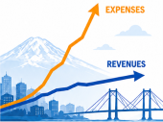
Expenses grow twice as fast as revenues due to the increasing demand for services, rising costs of personnel and service delivery, limits on revenue, and broader economic conditions.
Tacoma can continue reacting to each budget gap or we can build an organization designed for long-term sustainability and abundance. The 2027-2028 Proposed Budget takes a significant step toward a more resilient future by proposing responsible, yet difficult options that will save the community money now and in the future – providing us an opportunity to rethink how we do business as we implement the Roadmap to Recovery.
In order to sustainably provide excellent services the community can rely on, we must work toward the ambitious goal of matching ongoing expenses with ongoing revenues which requires us to advance structural, not temporary, solutions.
The Roadmap to Recovery will unfold over the next several years as we:
- Stabilize in 2026 – Control spending and new commitments. Protect core services. Establish credible financial and service baselines.
- Align in 2027 – Lower ongoing costs. Match ongoing expenses with ongoing revenues. Prioritize services and make explicit tradeoffs.
- Transform in 2028 – Redesign business models, structures, technology, workforce practices and service delivery.
- Build Capacity in 2029 – Reinvest savings in automation, prevention, workforce, infrastructure, and improvements that lower future costs.
- Sustain and Adapt in 2030 and Beyond – Keep expense growth within sustainable revenue growth. Continuously improve as community needs and conditions change.
This proposed balanced budget is not the finish line – it is the foundation of the work to come.
-
Tacoma 2035 sets the foundation to align the City’s work, including the development and adoption of the biennial budget, to best meet our community’s greatest challenges and enhance the quality of life for all Tacoma community members.
The strategic plan establishes seven goal areas for how the City of Tacoma can help advance its vision of a safe, housed, connected, working, sustainable, and thriving city.
Why Tacoma 2035?
Tacoma 2035 is meant to achieve the following: … Coordinate with budget development timeline and process, allowing for Tacoma 2035-aligned budget proposals and final budget document.
– Tacoma 2035 ExcerptGoal Area Summaries and Objectives
Goal Area Summary Objectives  We protect Tacoma’s natural environment and effectively adapt to and mitigate the impacts of a changing climate.
- Protect the health of the Puget Sound
- Adapt to sea-level rise and flooding
- Reduce urban heat islands
- Reduce air pollutants and smoke
- All solid waste is properly contained, collected, or reused
 We build a Tacoma where community members across all neighborhoods and demographics feel an increased sense of safety.
- Create safe places and neighborhoods
- Effectively serve people with specific safety needs
- Respond effectively with care
- Support individuals, families, and neighborhoods to promote healing and repair
 We position Tacoma to have the supply and diversity of housing options necessary to meet the needs of current and future residents across income levels and neighborhoods.
- Create and preserve more homes for more people
- Keep people in their homes and in their communities
- People receive the right services at the right time
- Homelessness is rare, brief, and one-time
 We grow a strong and resilient economy with good jobs, while also creating the conditions to support more (and better) jobs in the future.
- Invest in workforce development, upskilling workers to realize emerging opportunities
- Support a thriving business environment
- Grow existing businesses and attract new ones
- Increase the number of livable wage jobs
- Support a thriving, sustainable local taxbase
- Support the cultural sector and creative economy
 We ensure services are reliable, financially prudent, innovative, that employees are well cared for, and assets are well managed.
- Attract, develop, and retain the talent needed to deliver vital and reliable services
- Improve services and decision-making through reliable technology, quality data, effective tools, and modern processes
- Responsibly manage financial resources, facilities, and assets to sustain services and invest in Tacoma’s future
- Provide clear direction, model shared values, and hold the organization accountable for results
 We ensure Tacoma is a thriving city that people enjoy living in and visiting, with unique historic buildings, libraries, City-funded art, iconic venues, and support for many great festivals and events.
- Support a creative, artistic eco-system
- Provide spaces that welcome all cultures, abilities, and communities
- Increase access to event experiences throughout Tacoma
- Celebrate Tacoma’s unique history across cultures and communities
 We create and sustain a transformative, safe, and accessible multimodal transportation system that connects people to places and people to people.
- Tacoma’s transportation system is easily accessible for all users
- Eliminate all traffic deaths and injuries
- Tacoma community members can easily reach their daily needs and activities
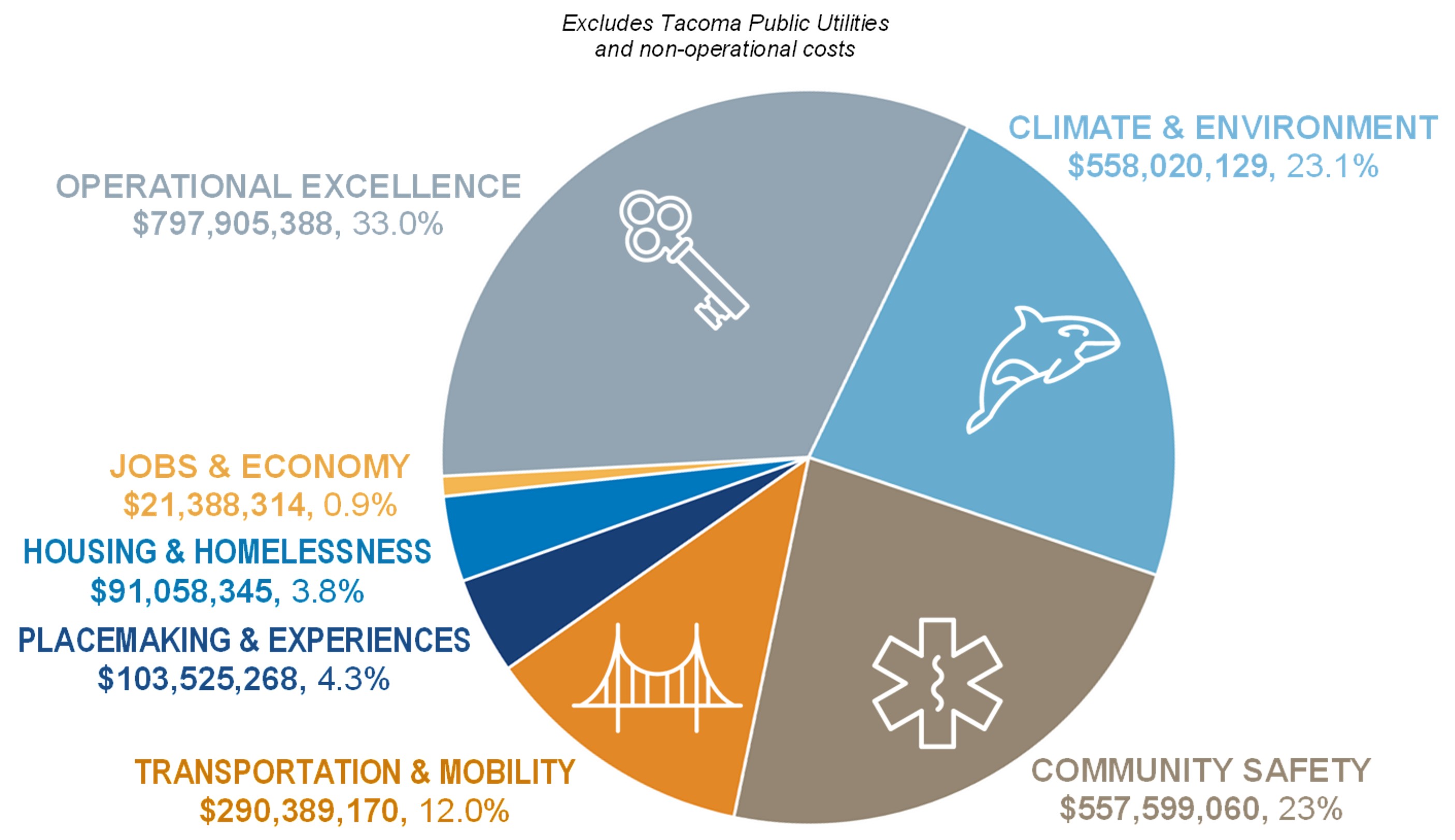
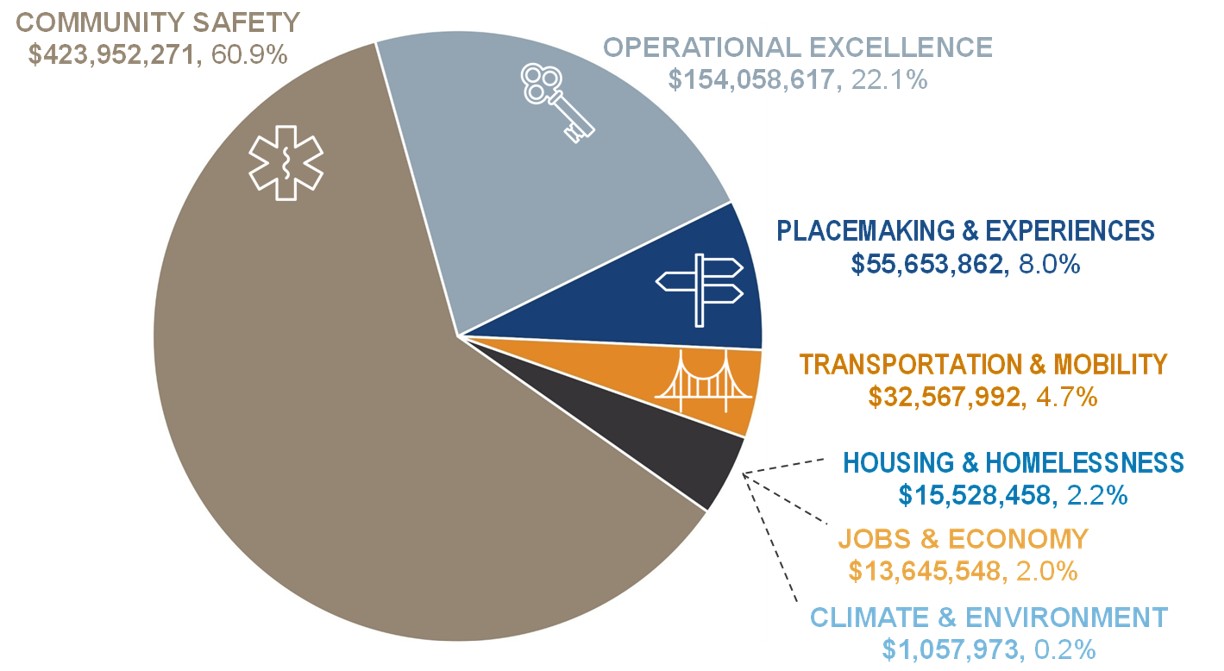
Budget by Tacoma 2035 Goal Area
Citywide Budget by Goal Area
General Fund by Goal Area
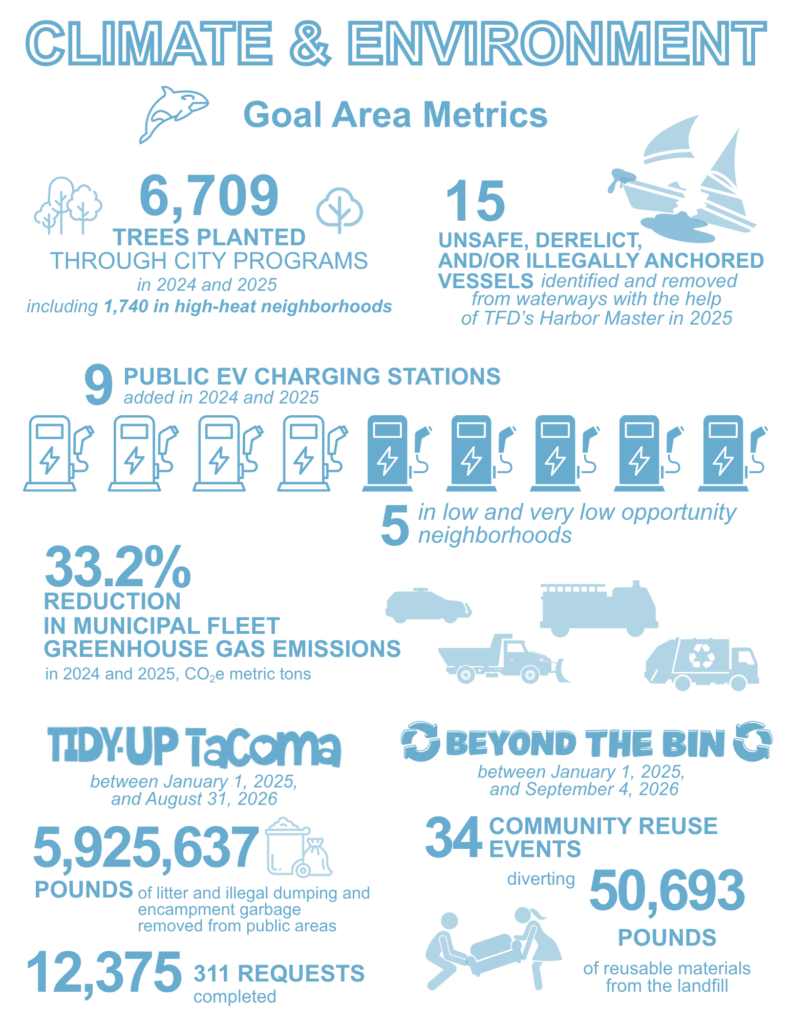
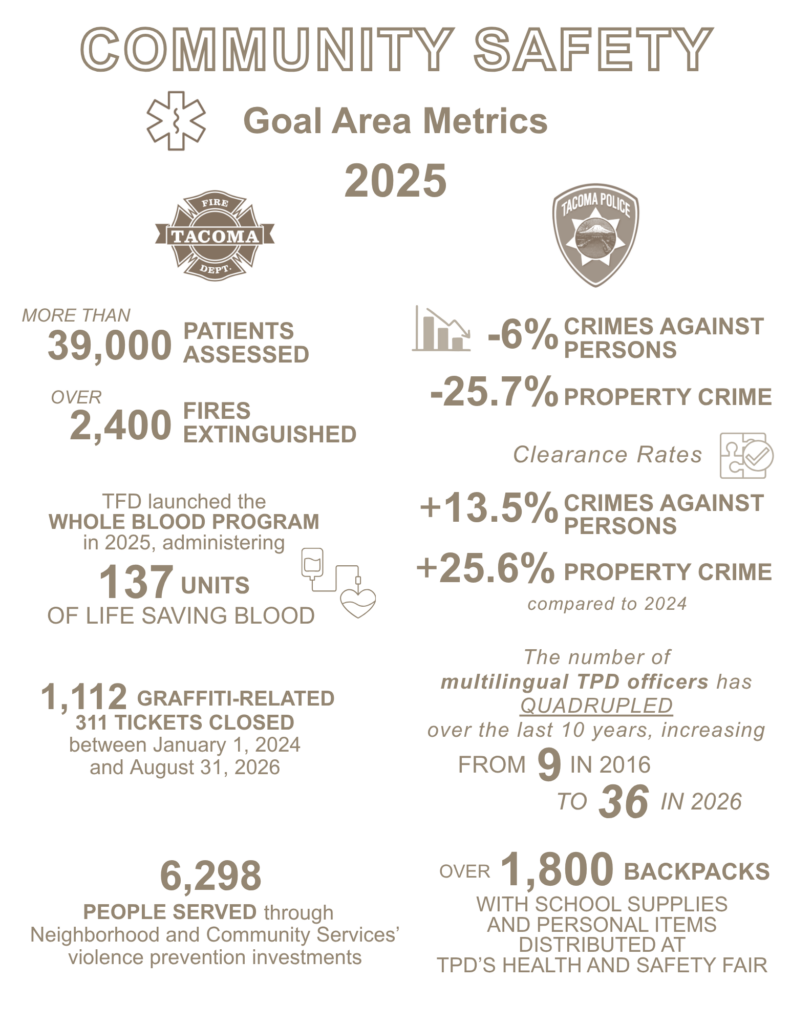
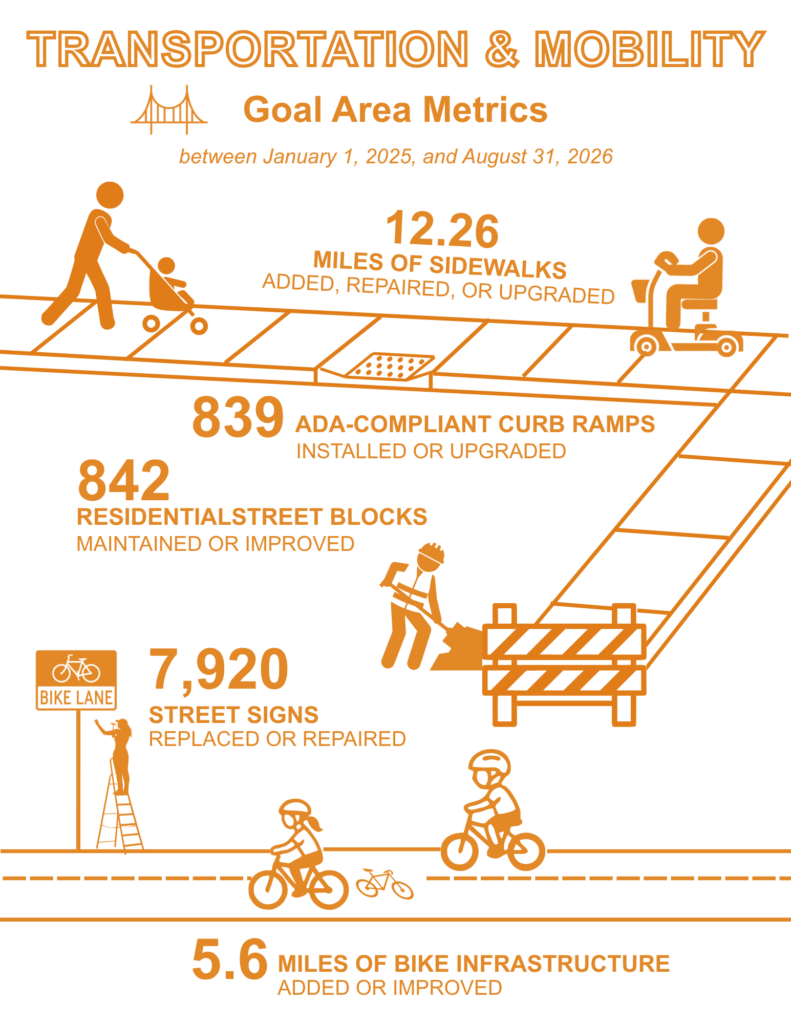
Goal Area Metrics
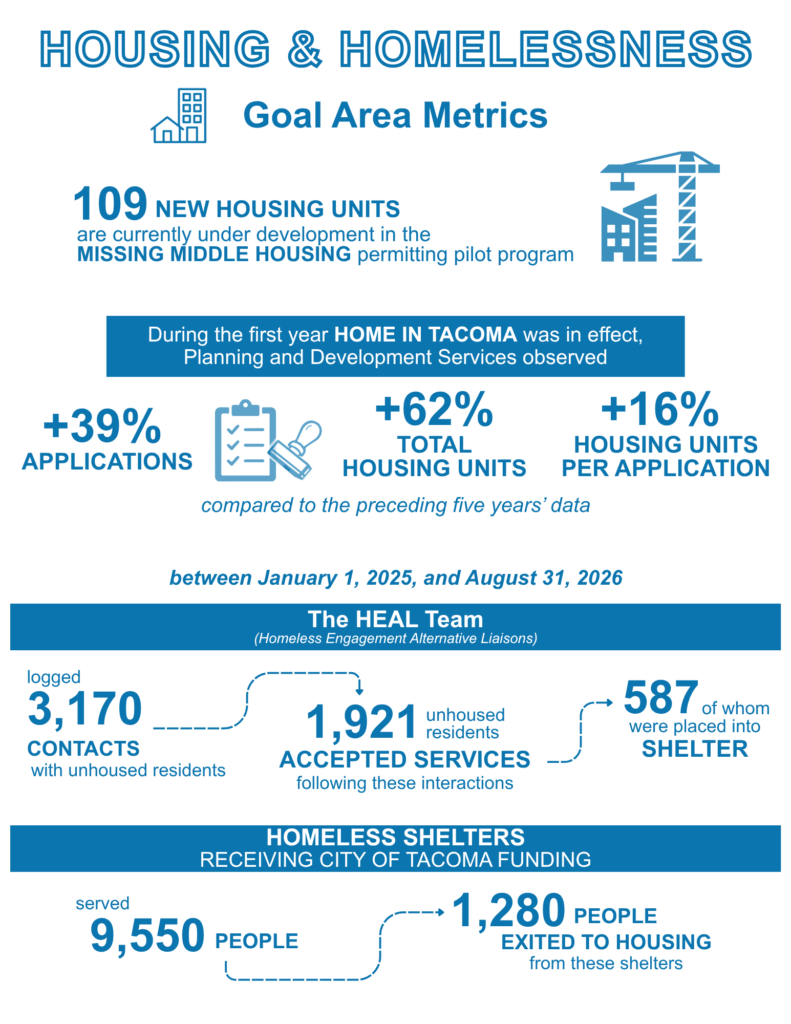
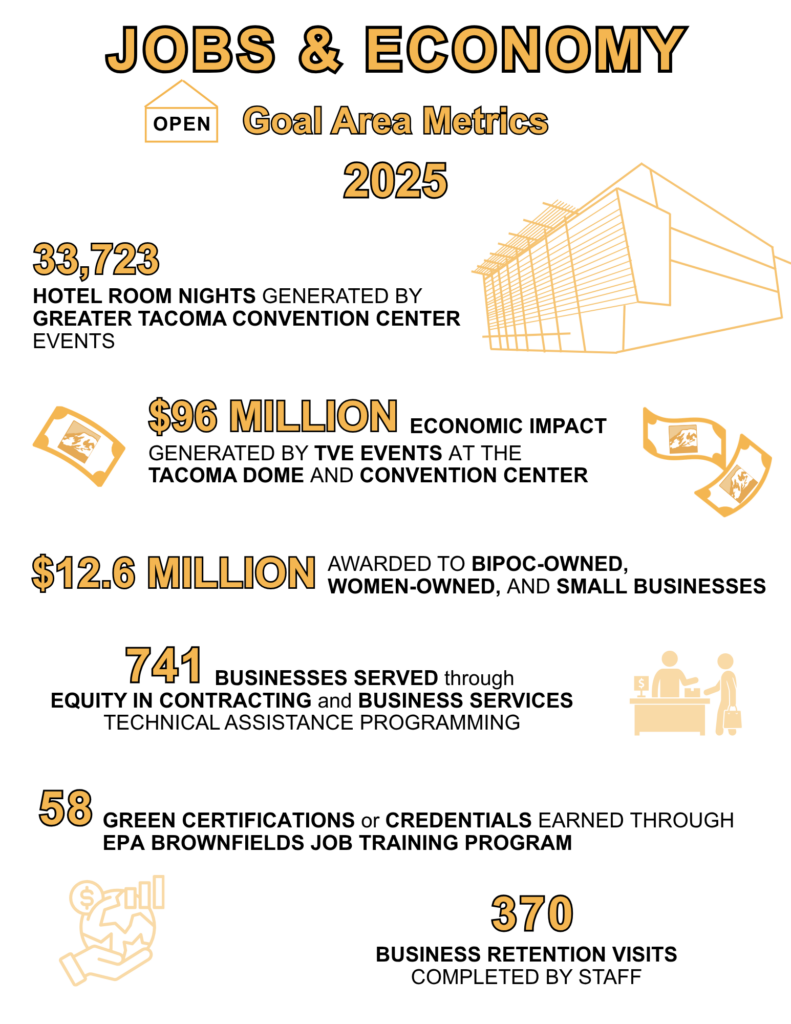
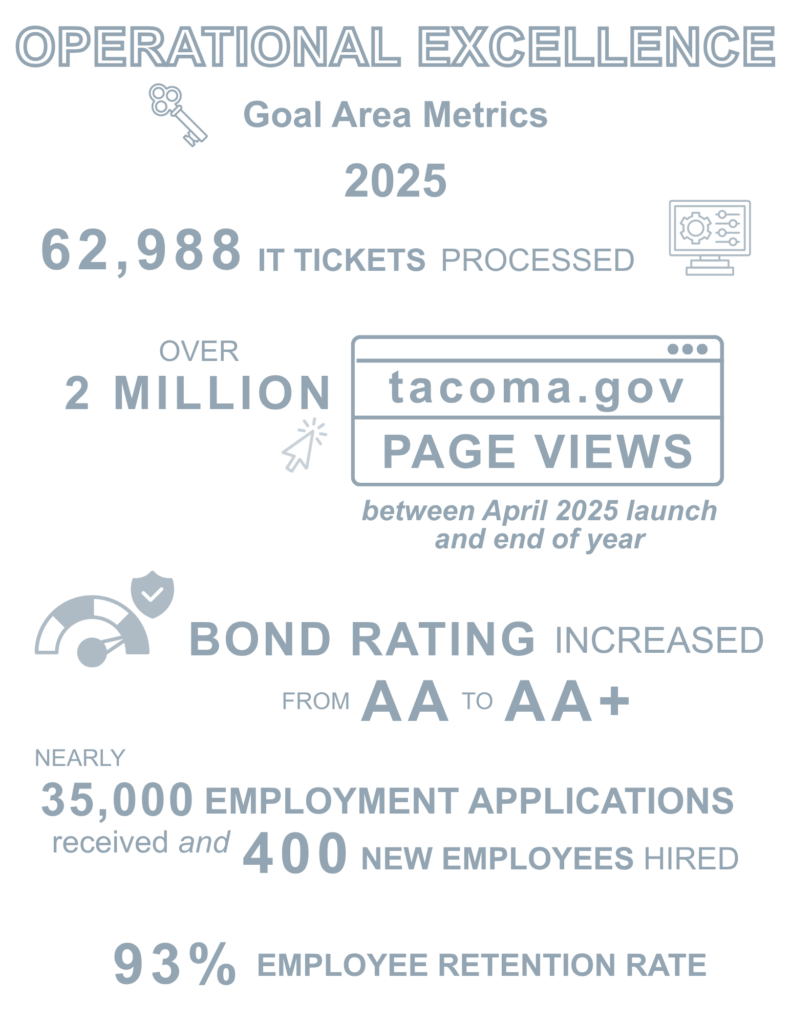
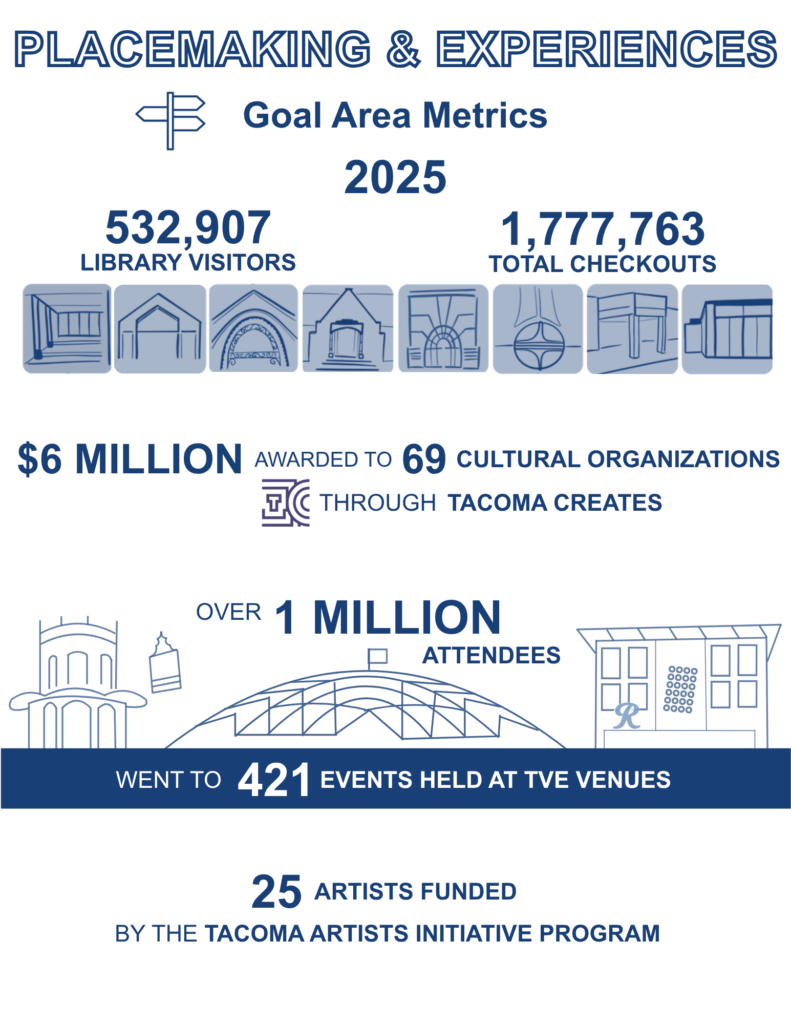
-
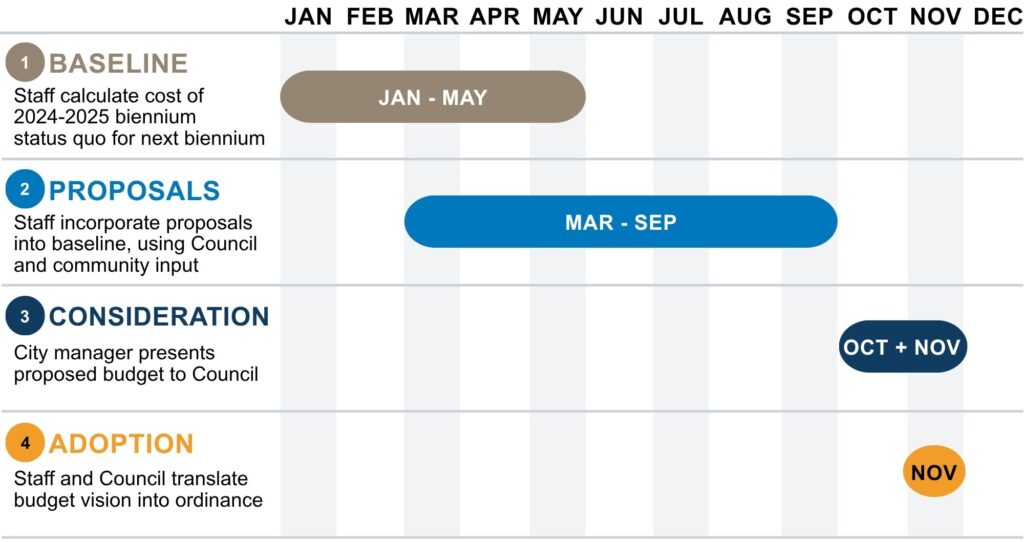
Budget Development Calendar
Community Engagement
During the 2027-2028 biennial budget development cycle, the City carried out community outreach to deepen public understanding of Tacoma’s fiscal issues and gather meaningful input on budget priorities. The City conducted its biennial community survey, which included specific questions related to the budget.
Community members were also invited to engage with the Balancing Act, which is an interactive learning tool that allows members of the public to experiment with different budget decisions and their trade-offs, using real budget data. The Balancing Act increased awareness of how City budgeting operates and participants were given the option to submit feedback on their budget priorities to City officials.
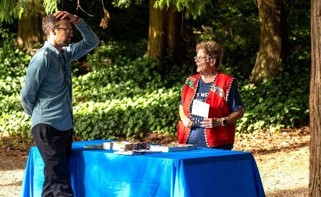
Staff tabled at events year-round, across Tacoma, to listen to community concerns and opinions. 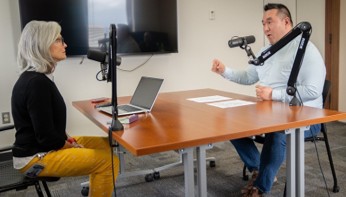
Media and Communications Office Director Amy Clancy and City Manager Hyun Kim discuss the General Fund structural gap on the Talking Tacoma podcast. Staff tabled at community events, where budget and policy conversations also presented opportunities to educate and answer questions about the budget and budget process. The City Manager’s Office and Office of Management and Budget published monthly budget-focused newsletters and participated in podcasts to provide more avenues for community members to learn about the budget.
Balancing Act
The City engaged community members through the Balancing Act tool, an online tool made available in July 2026. This interactive exercise allowed residents to explore the City’s $40 million General Fund structural deficit and experiment with adjusting revenues and expenditures within real world constraints. Participants could see how their choices affected the projected gap for 2027–2028, offering both meaningful feedback for staff and a clearer understanding of the tradeoffs involved in balancing the budget.
With historically strong participation, Balancing Act continues to be a key resource for learning about the City’s budget and identifying community priorities. Feedback from the tool will be shared with City Council as the budget is deliberated this year.
Community Survey
Every two years, the City conducts a statistically significant survey of randomly selected households from each of the City’s five Council Districts to hear directly from community members on their priority issues, gauge their level of satisfaction with City services, and inform strategic goal setting and decision-making processes.
The survey results are used by departments and divisions throughout the City to help identify budgeting and funding priorities, target specific services or programs for improvements, and to evaluate the efficiency and effectiveness of the City’s day-to-day operations. City staff sent approximately 5,000 invitations to residents across Tacoma to complete the survey. More than 900 community members (demographically representative of Tacoma’s population as a whole) completed the survey, establishing a low margin of error and exceeding the team’s goal for survey completions.
Findings
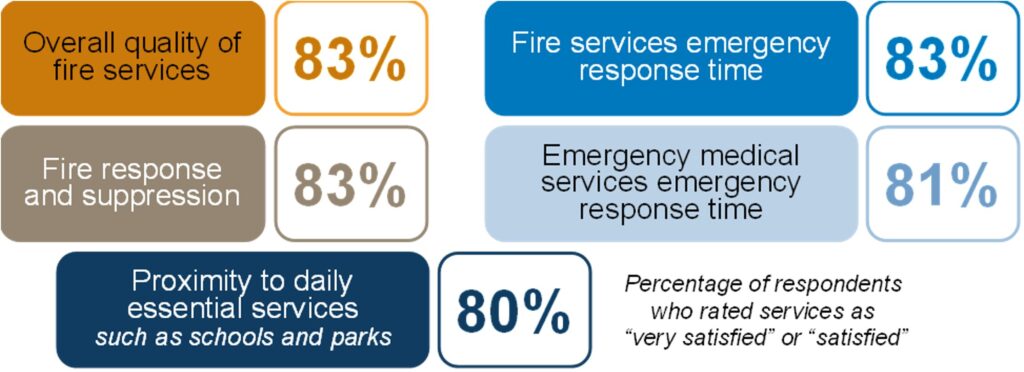
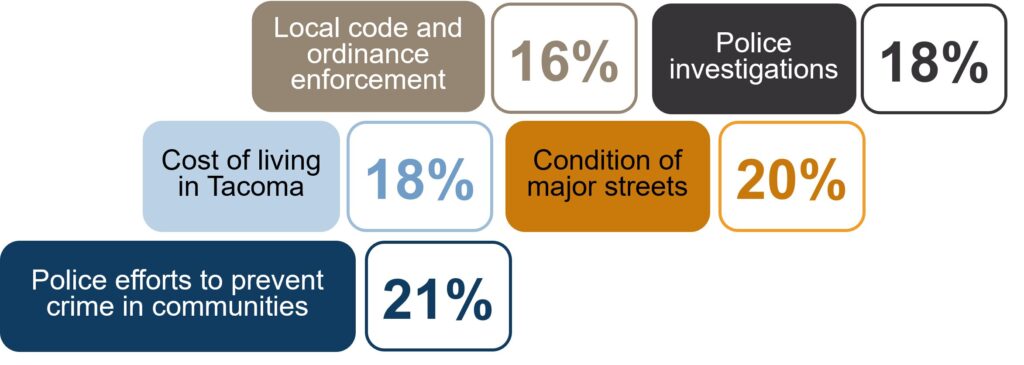
Overall, the 2026 City of Tacoma Community Survey results indicate residents recognize several strengths in the delivery of core City services, particularly emergency response, utilities, and access to community amenities.
The five highest rated services and community measures were:
The five lowest rated services and community measures were:
-
Overview
The City of Tacoma operates several large utilities under the direction of the Tacoma Utility Board, including Tacoma Power, Tacoma Water, and Tacoma Rail.
The City also manages utility services through its Environment and Public Works Department, which includes Solid Waste, Wastewater, and Stormwater.
How Rates are Invested
Rates cover the cost of operating and maintaining utility infrastructure, ensuring service reliability, upgrading technology to support long-term reliability, and protecting natural resources around facilities.
Why Rates Adjust
Utilities nationwide are experiencing rising costs and growing demand. Population growth and increased use of electric vehicles, air conditioning, and heat pumps continue to place greater demands on our systems. At the same time, operating costs are increasing due to specialized workforce needs, new technology, regulatory requirements, legal obligations, and healthcare expenses.
Even as costs increase, we are taking steps to reduce impacts on customer rates. Examples include rebuilding and maintaining existing equipment when practical, prioritizing projects that support safety and reliability, and maintaining current staffing levels to ensure service continuity. Teams also actively pursue grants, awards, and other external funding opportunities to help offset costs.
Divisions reviewed planned projects for 2027–2028, estimated costs for materials, labor, and operations, and forecast revenue to determine what rate adjustments are needed to maintain a balanced budget.
For information on rate development and cost drivers, please visit this website for information from Tacoma Public Utilities and Environment and Public Works’ presentation at the Government Performance and Finance Committee.
Proposed Utility Rate Changes
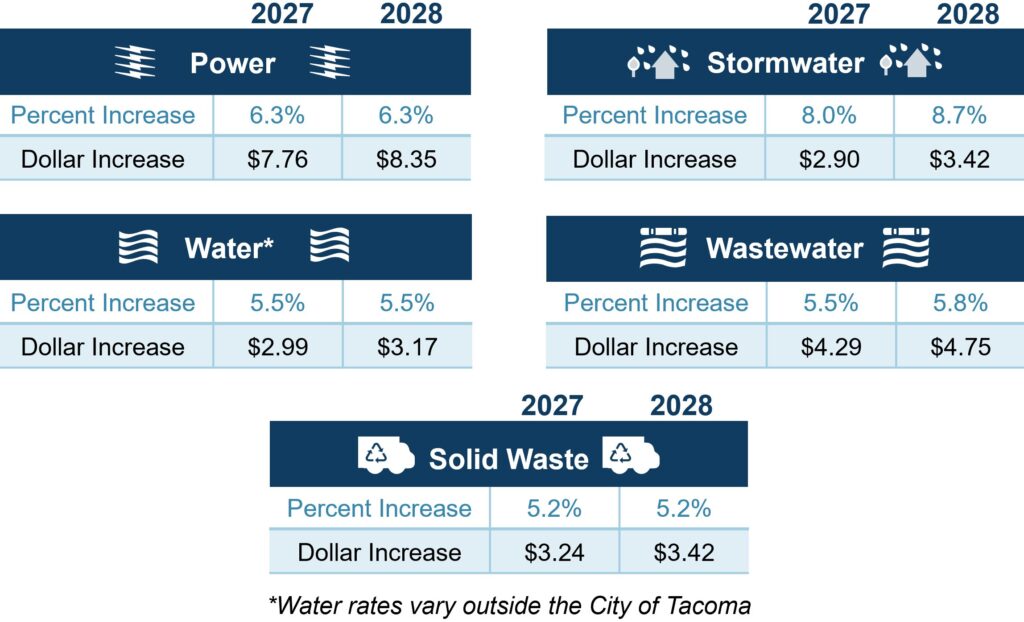
Tacoma Public Utilities and the Environment and Public Works Department are continuing to invest in programs that help customers manage utility costs, including conservation programs, rebates, incentives, assistance programs, and tools such as MyAccount. These resources help customers better understand and manage their power and water use while supporting broader conservation goals.
Rates displayed above are for residential Tacoma customers only. For all rate adjustments, including commercial accounts, reference www.mytpu.org/payment-billing/rate-information/.
-
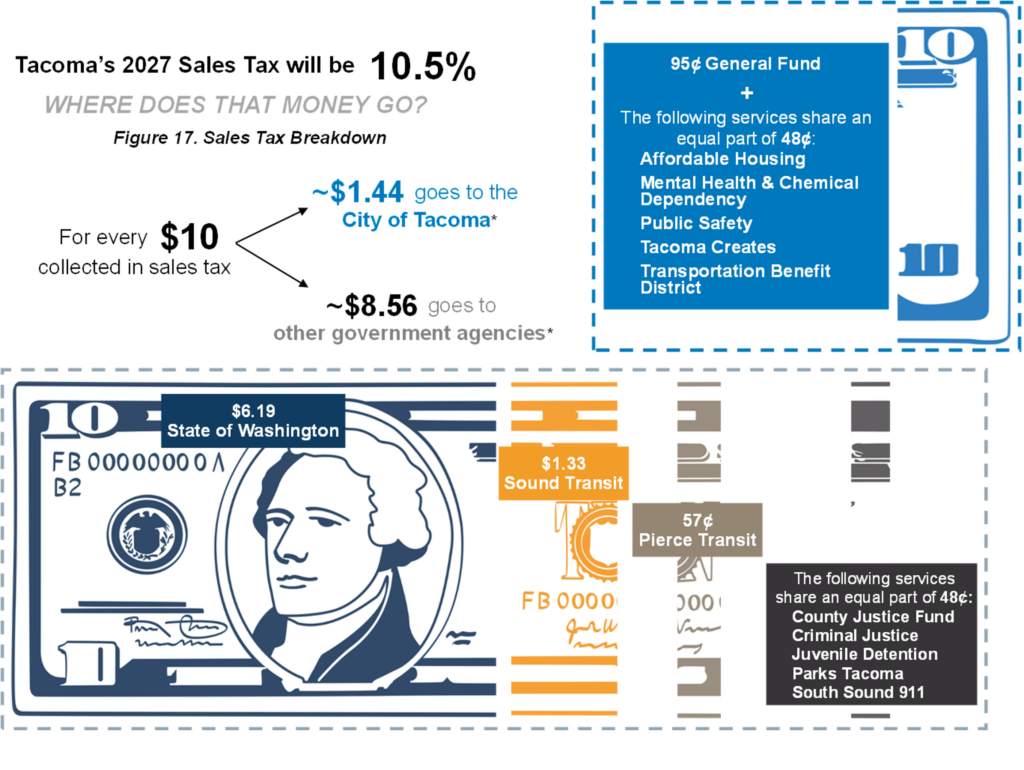
Sales Tax Breakdown
Property Tax Breakdown
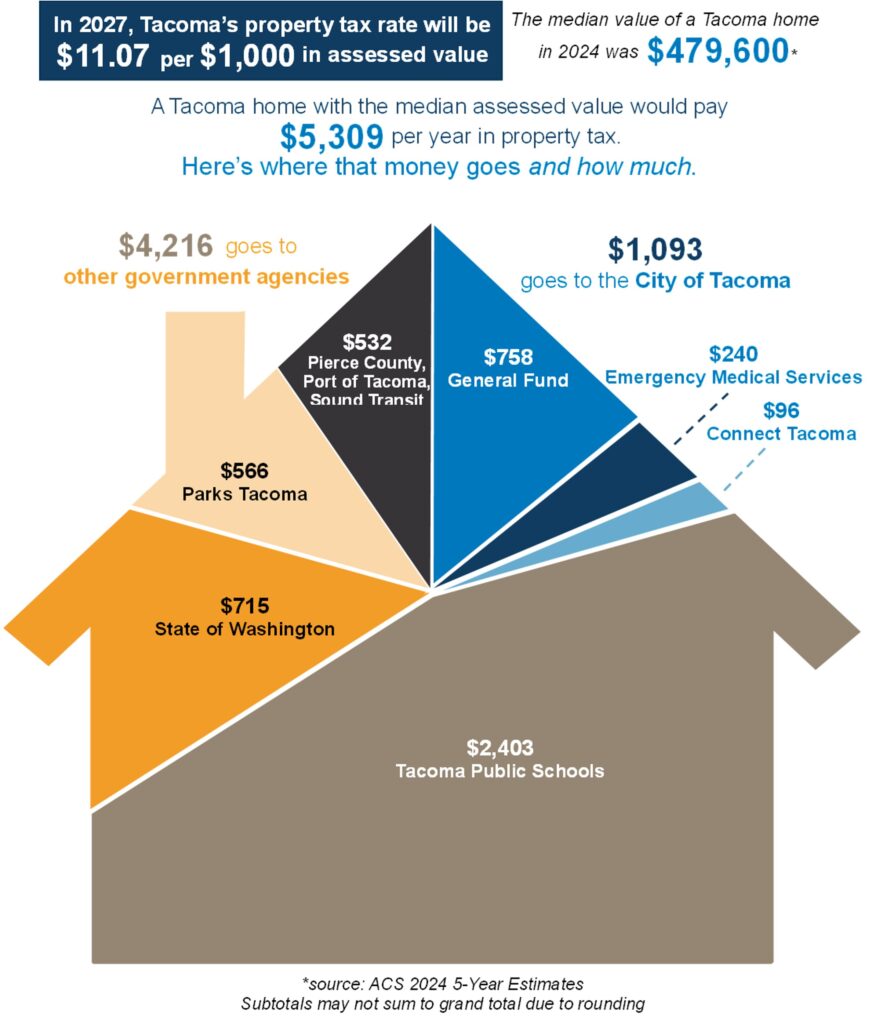
-
The budget process begins with a six-year forecast of General Fund revenues and expenses, giving the City a long-term view of its fiscal health. The General Fund pays for many of the services people use every day, including police, fire, libraries, homelessness services, and community programs. When the City set its baseline for this budget, the forecast showed a $40 million gap for 2027-2028, meaning the General Fund expected to spend about $40 million more than it would bring in over those two years. Because the City must adopt a balanced budget, that gap had to be closed.
June 2026 General Fund Financial Forecast
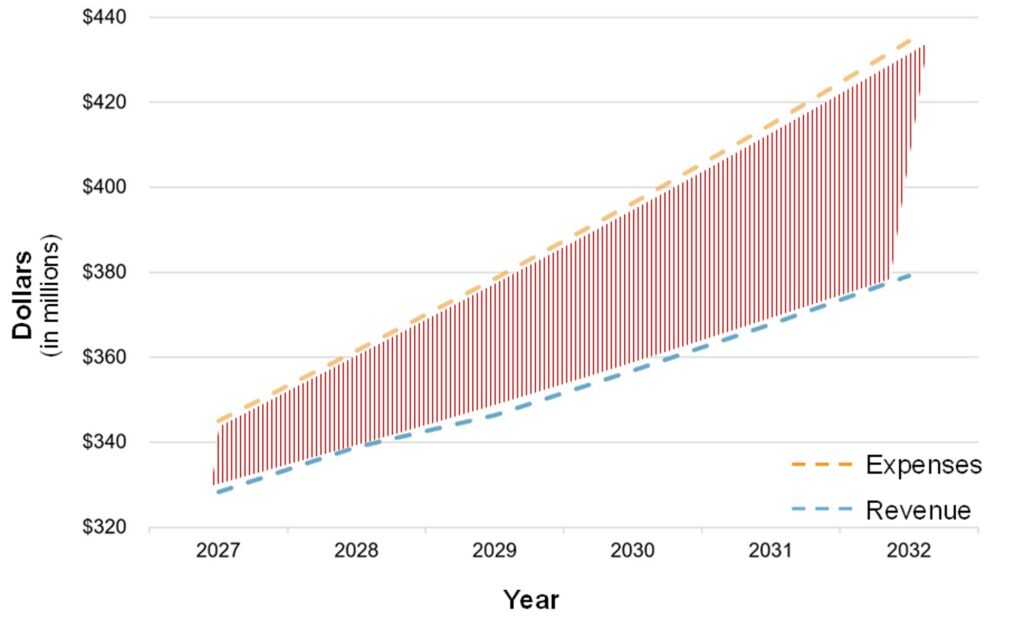
To close it, the City Manager directed all General Government departments to propose ongoing reductions of 5-10% to their budgets. These proposals were evaluated over the summer, and the Proposed Budget includes hundreds of them. Combined with new revenue and reduced or eliminated expenses, and alongside a few targeted investments where the need is greatest, these changes balance the 2027-2028 Proposed Budget. The next section highlights some of the most significant changes, and the Departments section of this document describes each proposal in more detail.
General Fund Proposed Budget Financial Forecast
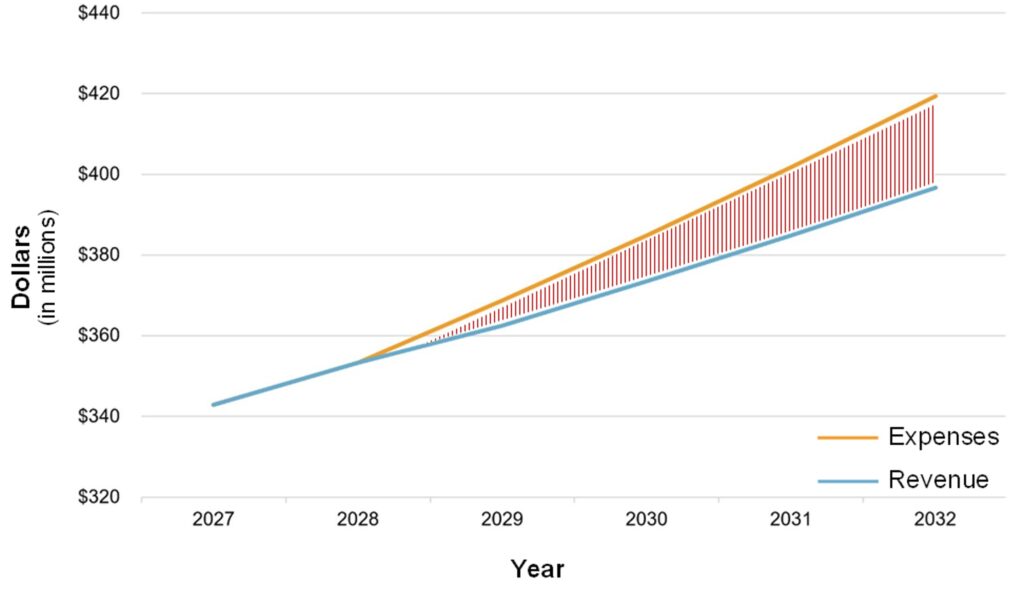
Balancing these two years is the first major step in the Roadmap to Recovery, the City’s multi-year plan to match ongoing expenses with ongoing revenues, guided by the Tacoma 2035 value of Fiscal Responsibility. However, the work is not finished. While 2027-2028 now has no gap between revenues and expenses, the later years of the forecast remain structurally imbalanced, with ongoing costs still expected to outpace ongoing revenues. The decisions in this Proposed Budget make significant progress toward closing that long-term gap, but future budgets will need to build on them.
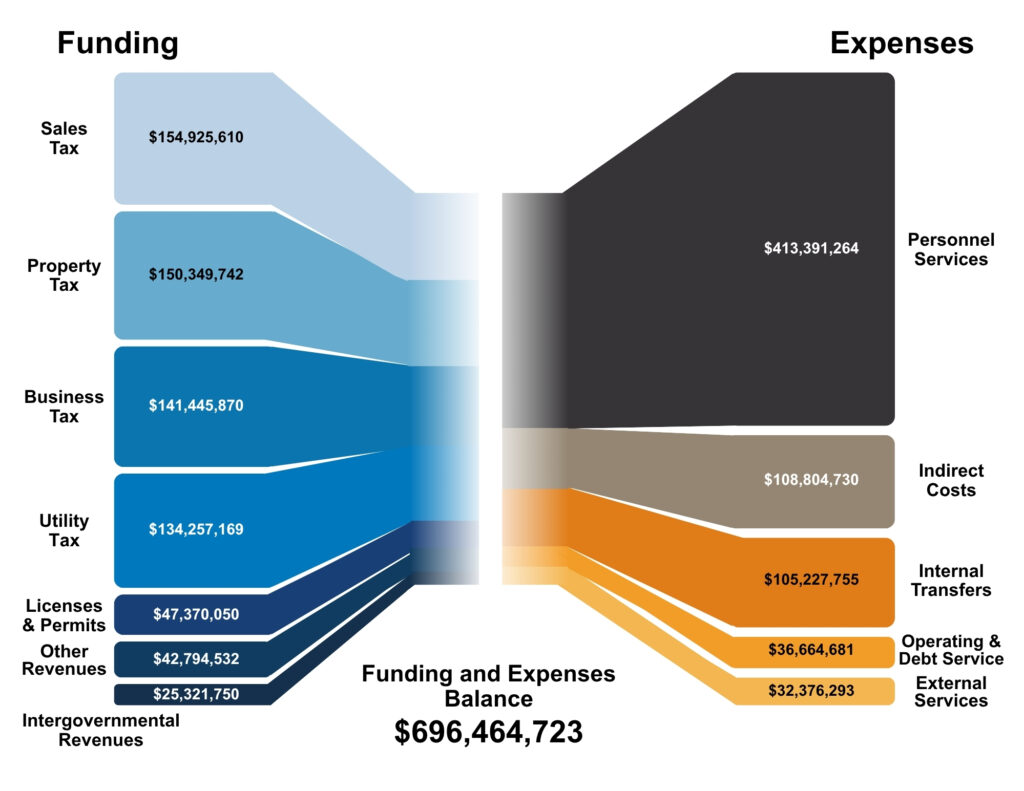
Below are all General Fund revenue and expense categories that make up the $696 million income and spending plan. For more detail on each item, see the Financial Foundations section of this document.
-
-
The City’s budget is one of the most important policy and strategic commitments we make to our community. It demonstrates our priorities, our commitments, and our investments in moving Tacoma into its future.
Budget development is guided by the vision and priorities set by the City Council and community. As a biennial budget, the Proposed Budget sets the spending priorities and restrictions for a two-year period. The City’s Budget development process entails a comprehensive effort designed to incorporate input from community members, the Mayor and City Council, department directors and employees. Throughout 2026, City staff worked to clarify the City’s strategic direction and align spending to meet priorities of the City Council and community.
The 2027-2028 City of Tacoma Proposed Budget invests $5.3 billion in our vision and mission set forth in Tacoma 2035, while making major, strategic steps towards addressing the City’s extant structural budget challenges.
The recommendations in this budget were guided by our commitment to:
- Invest in critical services and the outcomes that matter the most to the community.
- Promote access, opportunity, and belonging for all Tacoma community members.
- Use ongoing funding to address ongoing needs and reserve one-time resources for one-time needs, responsible transitions, and investments that reduce future costs.
- Align service commitments with sustainable operational capacity.
- Improve, consolidate, and redesign how we work to meet the community’s needs and do more with less.
Proposed Budget Major Changes
Program Reductions
Alternative Response
This budget discontinues two public safety alternative response programs that were initially created to provide specialized resources for response to mental health crises (HOPE) or low-risk incidents that traditionally involved police (Community Service Officers). These programs were initially funded with one-time investments of COVID-era American Rescue Plan Act (ARPA) revenue which allowed the City to launch and evaluate these programs. While each of these programs provides valuable services to the community, neither program could efficiently deliver effective services at their current scale of operations.
The Community Service Officers (CSOs) Program was created to give the Police Department another option for responding to certain non-emergency calls, with civilian staff handling incidents that didn’t require police authority so commissioned officers could remain available for emergencies and other calls requiring police response. Since launching in 2024, CSOs have responded to almost 5,000 calls for service and written over 2,500 reports. As of mid-2026, the team was responding to about 9.2 calls per day across five full-time employees. Moreover, a call diverted to a CSO does not always eliminate the need for a commissioned officer. Officers are often called upon to assist or assume responsibility because of safety concerns, criminal elements, evidentiary requirements, enforcement authority, or other factors requiring police authority.
Since the CSO Program was established, the way the department delivers police services has evolved. Community members now have multiple ways to report non-emergency incidents, including online reporting, commissioned officers assigned to the Alternative Response Unit (ARU) who complete reports by telephone, and improved call triage through South Sound 911. These service options were either unavailable or much more limited when the CSO program was created. At the same time, staffing levels have improved for commissioned officers who can respond to the full range of calls while also supporting investigations, proactive patrol, crime reduction, community engagement, and emergency response.
Holistic Outreach Promoting Engagement (HOPE)
The HOPE Team is a civilian co-response team that partners with Police and Fire on calls involving someone experiencing a behavioral health or substance-use crisis, bringing specialized training to situations that do not require an armed response. Since the program started, HOPE has responded to more than 2,600 calls for service.
The program began in 2023 and has been funded through a mix of grants and one-time cash reserves from the General Fund and the Mental Health & Substance Use Disorder Fund. From inception, HOPE struggled with recruiting challenges and changes in staffing that limited their ability to deliver services as originally intended. This was compounded by inadequate capacity at partner facilities which hindered the team’s ability to provide the desired support for individuals experiencing a mental health crisis.
Contrary to initial expectations, field conditions typically required HOPE to co-respond with traditional Police or Fire units, which resulted in longer on-scene times and decreased availability for those resources to respond to additional calls for service. Moreover, with HOPE only available during limited hours, we learned that effective crisis response depends on the highly-trained and compassionate response of our 24/7 emergency responders.
The City is committed to supporting individuals who are experiencing behavioral or mental health crises. The proposed budget continues to invest in the Homeless Engagement and Alternatives Liaison (HEAL) Team, Community Trauma Response Team, Designated Crisis Responder program, Community Court, and other services that provide a critical safety net and response network for individuals experiencing crises in our community.
Departmental Staff Reductions
Many of the departments of the City have proposed reductions to their staffing, including positions that have been held vacant through 2026 due to a City Manager-directed hiring freeze, changes in their service delivery or business volume, or to provide ongoing savings to address the fiscal gap in the General Fund. These proposed reductions will reduce over 100 positions throughout General Government departments. The Personnel Complement of this section describes these reductions in detail.
Revenue Changes
Business Licensing
Every year, about 28,000 Tacoma businesses pay for an annual business license, with the fee based on gross revenue, or the total amount of money a business brings in, so higher-earning businesses pay more. Right now, every business earning more than $5 million a year pays the same top-tier fee, whether it earns $5.1 million or $50 million. This proposal splits that top tier into two: one for businesses earning $5 million to $10 million, and a new one for businesses earning more than $10 million, so the fee better reflects how much a business actually earns. At the same time, fees would drop for the three lowest tiers (by 8% to 20%) and stay flat for the $1 million-$5 million tier.
Altogether, about 80% of Tacoma’s businesses, the small and mid-size majority, would see their license fee go down or stay the same, while the remaining 20%, the city’s highest earners, would see an increase. Together, these changes are expected to bring in about $3.1 million a year to help fund core City services like police, fire, parks, and libraries.
Commercial Parking Excise Tax
This budget proposes a new 10% tax on the fee businesses charge when someone pays to park in a lot or garage they operate. Under RCW 82.80.030, the City is allowed to create this tax specifically to pay for transportation projects. In practice, businesses that operate paid parking facilities collect the tax from customers along with the regular parking fee, similar to how sales tax is added at checkout.
The tax is expected to bring in about $2,250,000 in 2027-2028 and the money would go toward transportation projects such as road, sidewalk, and infrastructure improvements. The main impact would fall on people who pay to park in commercial lots and garages, who would see a modest increase in their parking cost. Tacoma community members who don’t regularly use paid parking would see little to no direct effect, while benefiting from the transportation improvements the tax helps fund.
Current and Proposed Business License Fees
Gross Income Thresholds Estimated Number of Businesses Current License Fee Proposed License Fee
Under $12,000 4,200 $37 $30 $12,000 to $250,000 12,300 $190 $150 $250,001 to $1,000,000 3,900 $435 $400 $1,000,001 to $5,000,000 2,600 $1,500 $1,500 $5,000,001 to $10,000,000 2,800 $2,000 $2,600 Over $10,000,000 2,600 $2,000 $3,000 Public Safety Sales Tax
In January 2026, City Council approved a new 0.1% Public Safety Sales Tax (the Criminal Justice Sales and Use Tax), which took effect in April 2026. That vote set the tax in motion; this Proposed Budget is what assigns how those dollars are invested over the next two years.
This budget puts just over $16 million of that revenue toward continuing several important City services:
- Maintains the Homeless Engagement and Alternatives Liaison (HEAL) program, which connects people experiencing homelessness with shelter and support services.
- Avoids reductions to homelessness services currently funded by the General Fund.
- Maintains funding for BRAYVE (Building Resilience Against Youth Violence and Exploitation), the City’s youth violence prevention program.
- Covers part of the rising cost of public defense, driven by new Washington State Supreme Court caseload standards that limit how many cases a public defender can handle, requiring the City to fund additional public defender services.
- Funds the City’s match for hiring 12 new police officers on a Criminal Justice Training Commission grant. The grant also funds three civilian staff to strengthen communication and support officer wellness.
Program Investments
Public Safety Fleet & Equipment
This budget maintains funding for Police to replace patrol vehicles on a regular schedule and restores some ongoing funding for the Tacoma Fire Department (TFD) so it no longer relies entirely on one-time funds to replace its frontline apparatus. A new $1.5 million annual investment covers the cost of replacing one fire engine per year, making real progress toward a healthy replacement cycle for a fleet whose frontline engines average 12 years old, with the oldest nearly 20, well past the 8-year mark when these vehicles should be replaced. The budget also includes a one-time $2 million investment to replace and outfit a ladder truck in service since 1999, ensuring TFD can continue responding to calls that require ladder access without interruption.
Body-worn cameras and in-car videos funded with ARPA are now in the baseline to ensure sustainable maintenance and replacement of the equipment.
Technology Investments
- $1.4 million increase in investment to ensure the City’s critical technology infrastructure and data, including customer and employee data, is protected with the latest developments in cybersecurity.
- Improvements to the supplier management for vendors who do business with the City through the Ariba procurement system by implementing the SAP Ariba Supplier Lifecycle and Performance (SLP) to improve vendor onboarding and management of contract performance and payments.
- Asset management module implementation to better monitor and report on the status of billions of dollars in assets the City owns, including those of Tacoma Public Utilities, to improve planning for repairs and replacements for service continuity.
Tidy-Up Tacoma
The Tidy-Up Tacoma program works to keep Tacoma clean and visually appealing. It is funded with a 6% excise tax on Solid Waste services that was approved by Council in the 2023-2024 budget. The program has improved cleanliness, connected communities at clean-up events, and fostered pride in the appearance of the City.
This budget continues these investments and reallocates dollars to expand some services to include an increase for more graffiti mitigation, installation of additional public litter cans, purchase of equipment to allow easier removal of bulky waste, and a new campaign called “Don’t Trash Tacoma.”
Organizational Structure Updates
Some reorganizations of departments and divisions were conducted as a part of budget development in 2026 and these changes are reflected in the Departments section of this document for 2027-2028 Proposed Budget. These moves were made to better align services and create efficiencies in internal and external service delivery. These changes moved budgets for the service and employees between departments.
Environment and Public Works Department: Formerly, Environmental Services and Public Works were under separate management. They are now combined and renamed as the Environment and Public Works Department under one director, resulting in the elimination of one director’s position. This change was made to streamline service delivery across staff, provide customers with more singular points of contact, and reduce redundancy of processes.
Housing Division: The Housing Division moved from Community and Economic Development to Neighborhood and Community Services to have the housing continuum under one department. This change reflects our commitment to creating a more unified and aligned continuum of services – from housing to homelessness response to the other vital human services that support residents’ well-being and stability – so that staff, partners, and the community benefit from a clearer and more cohesive structure. Neighborhood and Community Services will be engaged in work on a community needs assessment and resulting update to departmental strategy to reflect this alignment.
Tacoma Enterprise Safety: Tacoma Enterprise Safety moved from the City Manager’s Office to Tacoma Public Utilities to conduct a revisioning of what this division should provide for citywide safety efforts.
Innovation and Process Improvement Division: The Innovation and Process Improvement Division (formerly known as Continuous Improvement) moved from Human Resources to the City Manager’s Office to allow that staff to shift focus to supporting the Roadmap to Recovery.
Labor Relations Division: The Labor Relations Division moved from the City Attorney’s Office to Human Resources to streamline communications and support our commitment to our employees and labor partners and our day-to-day practices of human resources management.
Customer Service (Tacoma FIRST 311): The Customer Support Center moved from the City Manager’s Office (CMO) to the Finance Department for daily management in 2022, yet the budget remained in CMO until this biennium. This change better aligns the customer service required for general inquiries of the City and that of other areas of Finance that provide direct service to the community.
-
The 2027-2028 Biennial Proposed Budget includes a total of 4,216.8 authorized Full-Time Equivalents (FTEs) in all funds. The table below illustrates the annualized FTEs for each biennium listed as well as the difference between the 2025-2026 Adopted Budget and the 2027-2028 Proposed Budget.
Some of these position changes occurred during the 2025-2026 biennium (through the City’s Reappropriation and Modification Budget processes). The second table illustrates FTE changes for the General Fund. The description of changes that follow the tables are for each department and reflect changes for all funds, not just the General Fund. Please note that due to averaging between years and rounding, some totals may not sum exactly.
FTEs by Department, All Funds
*historic FTEs for Environmental Services and Public Works are combined into the new Environment and Public Works Department.
General Fund FTEs by Department
General Government Department FTE Change Explanations
City Attorney’s Office (-1.0)
2025-2026 Adjustments & Baseline Corrections
- Moved Labor Relations Team to Human Resources (-6.0)
- Added two Deputy City Attorneys at Tacoma Public Utilities, and one Prosecuting City Attorney (+3.0)
- Added one Office Manager in the Clerk’s Office (+1.0)
2027-2028 Changes
- Add one Prosecuting City Attorney (+1.0)
City Council (No Change)
City Manager’s Office (-21.3)
2025-2026 Adjustments & Baseline Corrections
- Moved Tacoma Enterprise Safety to Tacoma Public Utilities (-12.0)
- Recognized the Customer Support Center Tacoma FIRST 311 team moving into the Finance Department (-6.0)
- Moved Equity Programs Specialist from City Manager’s Office to Community & Economic Development (-1.0)
- Reduced Skilled Occupational Intern in 2025 (-0.1)
- Moved partial Senior Government Relations Advisor from Environmental Services into the City Manager’s Office (+0.4)
- Moved partial Senior Sustainability Analyst from Environmental Services to City Manager’s Office (+0.8)
2027-2028 Changes
- Reduce Innovation and Process Improvement Consultant Support (-2.0)
- Reduce TV Tacoma Team in Media & Communications Office (MCO) (-3.0)
- Allocate portion of Senior Telecom Engineer from MCO to Information Technology (-0.8)
- Reduce Communications & Marketing Analyst, Principal position from MCO (-1.0)
- Reduce Strategic Initiatives Coordinator Position from Center for Strategic Priorities (-1.0)
- Reduce Management Fellow (-1.0)
- Reduce Deputy City Manager position split between City Manager’s Office and Non-Departmental (-0.5)
- Reduce Senior Equity Analyst (-1.0)
- Realigned Innovation and Process Improvement Team from Human Resources to City Manager’s Office (+7.0)
Community and Economic Development (-13.3)
2025-2026 Adjustments & Baseline Corrections
- Moved Housing Division to Neighborhood and Community Services from Community & Economic Development (-12.0)
- Concluded funding for Minority Business Development Business & Economic Development analyst in June 2026 (-0.8)
- Concluded funding for Division Manager and Contract/Program Auditor in June 2026 (-1.5)
- Corrected Management Support Tech, Senior (-1.0)
- Moved Equity Programs Specialist from City Manager’s Office for Housing Division (+1.0)
- Added Housing Specialist and reduced Financial Assistant (+0.0 net)
2027-2028 Changes
- Reduce Business Services & Workforce Partnerships support levels (-1.0)
- Add Business Retention support levels (+1.0)
- Add Business & Economic Development Analyst Associate (+1.0)
Environment and Public Works (+7.8)
2025-2026 Adjustments & Baseline Corrections
- Reduced Public Works Director due to Environmental Services and Public Works merger (-1.0)
- Reduced Active Transportation Support as project position ends in 2027 (-0.5)
- Consolidated Urban Forestry staffing for efficiency (-0.4)
- Transitioned staff to the Center for Strategic Priorities (-1.3)
- Reduced expiring 2026 Project positions (-4.8)
- Transferred position from Planning and Development Services to support Capital Project Outreach (+1.0)
- Added staff support for the Traffic Signal and Street Light Electrical Apprentice (+1.0)
- Expanded the Public Garbage Can Program (+2.0)
- Added Deputy City Attorney for environmental compliance support (+1.0)
2027-2028 Changes
- Eliminate Asphalt Plant Support due to plant closure (-1.0)
- Reduce Facilities Maintenance staff supporting Tacoma Police Department facilities (-1.0)
- Reduce Local Improvement District Program Staff at the end of 2027 (-0.5)
- Reduce Capital Project Outreach staff (-1.0)
- Reduce Electrical Worker support in the Traffic Signal and Streetlight Program (-1.0)
- Delay implementation of the Solid Waste Driver-in-Training Program (-2.0)
- Reduce staff support for the Public Space Asset Management Program (-1.0)
- Reduce supervisory support for Systems & Performance Management Workgroup (-0.8)
- Transfer position from Planning and Development Services for Capital Engineering (+1.0)
- Add staff support for the Americans with Disabilities Act Program and Bridge Projects (+2.0)
- Add staff support for the Capital Project Engagement and Outreach (+2.0)
- Add staff support for Tidy-Up Tacoma (+1.0)
- Add staff support for Arterial Street Capital Improvement Projects (+2.0)
- Add staff support for the Traffic Signal & Street Light Program (+1.0)
- Add staff support to expand the Community Ambassador Program (+2.0)
- Extend Project staff to support the Call-2-Haul Multifamily Communication Pilot (+1.0)
- Extend Project staff to support the Residential Recycling Outreach Pilot (+1.0)
- Add staff support to meet increased demand for laboratory analysis (+1.0)
- Add staff support to address new Federal and State regulations (+1.0)
- Add staff support for Wastewater Treatment Plant Maintenance (+2.0)
- Add staff support for Sewer Collection System Maintenance (+1.0)
- Extend Project staff to complete updates to Electronic Documentation System (+1.0)
Finance (+7.1)
2025-2026 Adjustments & Baseline Correction
- Reorganized the Customer Support Center-311 team into Finance, from City Manager’s Office (+6.0)
- Recognition of full-time employment of Tax & License Field Auditor added with delayed 2025 start (+0.1)
2027-2028 Changes
- Reduce Customer Support Center Tacoma FIRST 311 support (-1.0)
- Expand Tax & License Audit Team (+1.0)
- Add Business Systems Analyst to assist with system improvements (+1.0)
Fire (-17.0)
2027-2028 Changes (-17.0)
- Outsource Emergency Medical Service (EMS) Billing Services (-8.0)
- Discontinue HOPE Program (-9.0)
- Reduce Emergency Management Program (-1.0)
- Add Peer Support Service Levels (+1.0)
Hearing Examiner (No Change)
Human Resources (-5.0)
2025-2026 Adjustments & Baseline Corrections
- Moved Innovation and Process Improvement Team to City Manager’s Office (-7.0)
- Moved Labor Relations Team from City Attorney’s Office (+6.0)
2027-2028 Changes
- Reduce Human Resources administrative support (-1.0)
- Reduce Wellness Program service levels (-1.0)
- Reduce Employee Engagement service levels (-1.0)
- Reduce Talent Acquisition and Employee Relations Service Levels (-1.0)
Information Technology (-10.2)
2025-2026 Adjustments & Baseline Corrections
- Reduced Communications System Tech II temporary position that supported succession planning (-1.0)
2027-2028 Changes
- Reduce Communication Service Technician due to changes in Telecom business practices (-1.0)
- Reduce IT Analyst, Senior Technical due to IT system migration (-1.0)
- Reduce internal customer service and Finance Management Accounting Services support (-2.0)
- Reduce manager support in internal customer service (-2.0)
- Reduce Assistant Director, Technology due to retirement (-1.0)
- Reduce digital office Computer Support Technician support (-2.0)
- Reduce Technology Project Manager, Sr, from pool of project managers (-1.0)
- Reduce Data Analyst, Senior, from Enterprise Data Management (-1.0)
- Add Telecom Engineer, Senior reassigned from Media and Communications (+0.8)
- Add IT Analyst, Senior, to support external TPU customer service training environment (+1.0)
Library (-1.5)
2025-2026 Adjustments & Baseline Corrections
- Corrected budget designation for Branch/Department Supervisor position (-1.0)
- Ended time-limited Librarian II position that was funded using trust fund dollars to staff and program the new maker space in Main library (-1.0)
- Ended time-limited Library Curiosity Navigator position that was funded by National Historical Publications and Records Commission to digitize 8,000 items in the Tacoma News Tribune Archive (-0.5)
- Corrected budget designation for Library Program Coordinator position (+1.0)
Municipal Court (-0.5)
2027-2028 Changes
- Reduce Traffic Enforcement Court Clerk pool (-0.5)
Neighborhood and Community Services (+12.0)
2025-2026 Adjustments & Baseline Corrections
- Moved Housing Division from Community & Economic Development to Neighborhood & Community Services (+12.0)
2027-2028 Changes
- Reduce vacant contract/program auditor position (-1.0)
- Add an Assistant Director position to increase capacity for Housing Division integration and multiple strategic planning efforts (+1.0)
Non-Departmental (-1.0)
2025-2026 Adjustments & Baseline Corrections
- Ended City-sponsored Participatory Budgeting position budgeted through 2025 (-0.5)
2027-2028 Changes
- Reduce Deputy City Manager position whose funding is split between Non-Departmental and City Manager’s Office (-0.5)
Planning and Development Services (-20.5)
2025-2026 Adjustments & Baseline Corrections
- Reduced permit operations, critical areas, and regulatory enforcement leadership and supervision positions (-5.0)
- Reduced Site Development Group Project positions and other project positions ending in 2026 (-17.5)
- Transferred Principal Business Services Analyst position to Environment and Public Works (-1.0)
2027-2028 Changes
- Reduce Long Range Planning Division Manager, Skilled Occupational Intern, Chief Fire Code Official, and Senior Engineer positions, and vacant positions intended to offset project-to-permanent conversions (-7.0)
- Transfer Vacant Traffic/Transportation Review position to Environment and Public Works (-1.0)
- Convert permit operations, critical areas, and regulatory enforcement leadership and supervision project positions to permanent positions (+6.0)
- Extend Site Development Project Positions ending in 2026 through 2028 (+4.0)
- Correct two Site Development Project Positions through 2028 (+1.0)
Police (-7.3)
2025-2026 Adjustments & Baseline Corrections
- Added one Senior Business Services Analyst for policy development (+1.0)
2027-2028 Changes (-8.3)
- Reduce Community Service Officer Program (-10.0)
- Reduce Crime Analysis Unit support (-2.0)
- Reduce Police Chief of Staff (-1.0)
- Reduce Forensics support (-2.0)
- Reduce Police administrative support (-1.0)
- Add 12 Police Officers and three non-commissioned support staff through the first six months of 2027 for Criminal Justice Training Commission Grant (+3.8)
- Add Sergeants through Letter of Agreement (+2.0)
- Add Youth Engagement Officers for Tacoma School District partnership (+2.0)
Retirement (+0.3)
2025-2026 Adjustments & Baseline Corrections
- Reduced temporary LEOFF I Pension Specialist (-0.7)
2027-2028 Changes
- Add one Retirement Specialist, Senior, to support increased retirement workload (+1.0)
Tacoma Venues and Events (-8.0)
2027-2028 Changes
- Restructure staffing levels due to reduced Tacoma Dome event volume (-8.0)
TPU FTE Change Explanations
Power (+1.9)
2025-2026 Adjustments & Baseline Corrections
- Transferred Business Services Analyst to Management Services Office People & Culture team (-1.0)
2027-2028 Changes
- Add support for the Relicensing efforts of three Hydro Projects (+3.0)
Water (+1.5)
2027-2028 Changes
- Add Project support for Howard Hanson Additional Water Storage Project (+1.0)
- Add support for Cascade Water Alliance (+0.5)
Rail (No Change)
TPU Service Divisions (+2.5)
2025-2026 Adjustments & Baseline Corrections
- Transferred Business Enablement team to Utility Technology Support Services (-6.0)
- Transferred Business Services Analyst from Power Shared Services (+1.0)
- Added Business Services Analyst (project of limited duration) in support of SAP projects (+1.0)
- Transferred Business Enablement team from Customer Experience and External Affairs (+6.0)
2027-2028 Changes
- Eliminate Advanced Meter Field Investigator positions (-6.0)
- Eliminate Advanced Meter Field Investigator, Lead position (-1.0)
- Eliminate Customer Services Analyst, Principal position (-1.0)
- Eliminate Customer Service Representative positions (-2.0)
- Eliminate Assistant Division Manager position (-1.0)
- Eliminate Business Systems Analyst, Senior position (-1.0)
- Eliminate Customer Service Analyst (-1.0)
- Eliminate Department Aide (-1.0)
- Delay hiring for public disclosure vacancies (-1.5)
- Add Business Services Manager for People & Culture team (+1.0)
- Add Public Disclosure analysts to support records requests (+3.0)
- Reorganize Tacoma Enterprise Safety team from City Manager’s Office (+12.0)
Departments
-
Read or download individual proposed department budgets in PDF format below. Each document describes the department’s services and provides a three-biennium overview of department budgets, presenting figures from the 2023-2024 actual budget, 2025-2026 adopted budget, and 2027-2028 proposed budget.
Each department’s section is divided into these major components:
- Organizational Structure & Services Overview
- Organizational chart of the department and descriptions of the major service areas.
- Funding
- Visualization of three biennium trends of the sources of funding that support the department’s services, including an explanation of the sources and changes.
- Departmental funding generally comes from taxes, fees for service, grants, and charges for services (like utility rates). The source of the money often determines what it can be spent on. The General Fund, largely funded by tax revenue, has the fewest spending restrictions and funds core government services such as police, fire, libraries, and social services. Other revenues, like permit fees, can only be used to pay for the services they provide.
- Indirect Costs are seen in departments that send their costs to other City departments for the services they provide, and this is reported as the funding source for those internal services.
- Expense & Full-Time Equivalents (FTEs)
- Changes in a department’s biennial funding or expense can be related to Proposed Budget Changes, adjustments made in other budget amendment processes prior to the development of the 2027-2028 Proposed Budget, or in recognition of the increased cost of providing a service (such as wage & benefit increases or increased prices on contracted services or supplies).
- Detailed explanations of the changes in FTEs between the 2025-2026 Adopted Budget and the 2027-2028 Proposed Budget can be found in the Personnel Complement in the Budget-In-Brief section of this document.
- Proposed Budget Changes
- Summary of significant budget changes with a short description or expected impact.
- Organizational Structure & Services Overview
-
Select a department’s icon to read or download the proposed budget in PDF format.


Financial Foundations & Capital
-
City budgets are made up of and reference many different funds. Some funds have restrictions and may only be spent on certain types of expenses. Other funds may be for ongoing expenses while others are dedicated to a one-time, specific purpose.
This section provides some foundational information about the City’s various budgeted funds, serving as a reference guide similar to a fund dictionary or glossary. It begins with an in-depth look at the General Fund’s revenues and expenses.
-
The City incorporates many different methodologies and approaches to develop its revenue forecast. These methodologies include analyzing historical trends from monthly financial reports, reviewing economic indicators from agencies and experts in the field, and engaging in conversations with residents and utility customers.
The City’s goal for forecasting revenues is not to be overly conservative or optimistic. Being overly conservative may result in opportunity losses for the City, preventing it from spending funds on services that the City could have provided. At the same time, being overly optimistic could result in having to reduce or eliminate services if revenues failed to meet projections. Due to the cyclical nature of the economy, the City avoids overcommitting all its ongoing revenues during positive economic periods to avoid service reductions in downturns.
The General Fund is supported by several major revenue sources, each influenced by different economic conditions, state laws, and City policies. The section below explains how each revenue source works, what drives it up or down, and how much it is expected to contribute to the General Fund for the 2027-2028 Proposed Budget.
General Fund
Property Tax
Property tax is money the City collects from people who own homes, buildings, and land in Tacoma. It is one of the City’s largest and most dependable sources of money.
Washington State law limits how much more property tax the City can collect each year. The City can only raise property tax collections by 1%, or by the rate of inflation (called the Implicit Price Deflator), whichever number is smaller. Inflation is how much more expensive things get over time. This rule means the City’s property tax money grows slowly and predictably each year, even when prices are rising quickly.
There is one way property tax money can grow faster: new construction. When new homes, apartments, or businesses are built in Tacoma, they add new value to the tax rolls, and the City can collect tax on that new value too. Building activity changes a lot from year to year depending on the economy, so this part is harder to predict. Based on current forecasts for construction in Tacoma, the City expects a steady, moderate amount of new building over the next few years. Putting these two pieces together, the City expects property tax money to grow by about 2% per year, on average, over the next two years.
Property taxes are projected to generate $150.3 million, or 21.6% of all General Fund biennial revenue.
Sales Tax
Sales tax is money added to the price of things people buy. In Tacoma, shoppers pay a total sales tax rate of 10.5%, yet only 1.0% goes to the City’s General Fund to pay for everyday services. The rest goes to the State, Pierce County, and other local agencies.
On top of that 1.0%, the City collects a few smaller sales taxes, each one-tenth of one percent (0.1%). Unlike the General Fund money, these small taxes can only be spent on specific things. They pay for: mental health and substance use disorder services, transportation projects (through the Transportation Benefit District), arts and youth programs (through Tacoma Creates), affordable housing, and public safety.
Sales tax money tends to rise and fall along with the economy. From 2016 to 2023, the City’s General Fund sales tax money grew by about 5% per year, on average. Much of that growth came from retail sales, construction companies, and wholesale businesses. Sales tax depends on how much people earn, how easy it is to find a job, and how confident people feel about spending money. Because of this, sales tax can grow quickly when the economy is doing well and slow down quickly when it is not. Looking ahead, the City expects sales tax money to grow by about 3% per year above the amount expected in 2026. This forecast is based on recent spending habits, job numbers, and interest rates.
Sales tax is expected to bring in $154.9 million, or 22.3% of all General Fund revenues.
Business and Occupation Tax
The Business and Occupation tax, often called the B&O tax, is a tax on businesses operating in Tacoma. It is based on a business’s gross receipts, which means the total amount of money a business brings in before subtracting any expenses. Because this tax is tied so closely to how much business activity is happening in the city, it can rise and fall a lot depending on the strength of the local economy.
The City expects B&O tax money to grow by 2.4% over the next two years. This is a hopeful forecast, but it is based on strong performance from service businesses and wholesale businesses. At the same time, some other types of businesses are expected to bring in less money, including natural gas companies, cable television providers, and certain manufacturers. These declines partly cancel out the gains from service and wholesale businesses.
Business and Occupation (B&O) taxes represent $141.4 million or 20.3% of all General Fund revenues.
Utility Tax
Tacoma’s utility tax is also called the Gross Earnings Tax, or GET for short. It is a tax on companies that provide public services in the city, such as electricity, natural gas, phone and internet service, water, sewer, and garbage collection. It also applies to Tacoma Public Utilities’ own operations, including Tacoma Power, Tacoma Water, Tacoma Rail and the utilities of Environmental & Public Works.
Like the B&O tax, the utility tax is based on a business’s total income, not its profit. This means the tax is calculated on all the money a utility company brings in, with no deductions for the cost of labor, equipment, or other business expenses. In practice, this tax works like the B&O tax, but it applies specifically to utility companies instead.
Utility taxes represent $134.3 million or 19.3% of all General Fund revenues.
Other Revenue Sources
Besides property tax, sales tax, B&O tax, and utility tax, the General Fund also receives money from other sources and these may not rise and fall mainly with the economy. Instead, they can change based on decisions made by the City Council and on one-time funding from the state or federal government.
From largest to smallest, in the 2027–2028 Proposed General Fund Budget, they are:
- Licenses & Permits, $47.4 million
- Licenses and Permits are fees the City charges for things like business licenses, fire inspection permits, and other required permits.
- Miscellaneous Revenues, $26.8 million
- Miscellaneous Revenues include money from interest earnings, donations, the sale of City property, and other one-time or unusual sources. It also includes any transfers from other funds to the General Fund, like the Public Safety Sales Tax that is collected in a Special Revenue Fund but a portion is transferred to support General Fund public safety services.
- Intergovernmental Revenues, $25.3 million
- Intergovernmental Revenues are payments the City receives from other government agencies. This includes liquor taxes, along with money for criminal justice programs and fire protection services.
- Some of the Intergovernmental Revenues category comes from the State. To estimate how much the City will receive, it relies on research and analysis from the Municipal Research and Services Center (MRSC), an independent group that studies trends and laws affecting Washington cities and counties.
- Charges for Services, $6.2 million
- Charges for Services are fees the City charges to cover the cost of specific services, such as making copies, filing paperwork, or responding to false alarms.
- Other Taxes, $5.3 million
- Other Taxes include leasehold excise taxes (a tax on people who lease public land) and gambling taxes.
- Use of Cash Reserves, $2.3 million
- Use of cash reserves is money the City takes from its savings to help pay for services. Some of this savings builds up over time. In past budget periods, the General Fund ended with more money than planned, because spending came in under budget or revenues were higher than expected. The City’s reserve policy requires it to keep a minimum amount in reserve for emergencies and economic downturns. Savings above the levels the policy calls for are considered “excess,” and they can be used to help pay for one-time investments.
- Fines & Forfeits, $2.1 million
- Fines and Forfeits are penalties the City collects, such as fines for driving under the influence (DUI) or for paying business taxes late. State law and City rules require many of these fines, so the City does not have much control over them.
In total, Other Revenue Sources in the General Fund represent $115.5 million or 16.6%.
- Licenses & Permits, $47.4 million
-
Forecasting the City’s expenses is a detailed process that helps us prepare for how much it will cost to provide services in the years ahead. These costs include employee wages and benefits, payments for contracted services, supplies and equipment for departmental operations, and the maintenance or replacement of City‑owned assets like vehicles, facilities, and technology.
The General Fund acts as the City’s main checking account for daily services such as police, fire, parks, and libraries. Just as the General Fund brings in revenue from many different sources, it also supports many different types of spending. The sections below describe each major expense type – what it covers, why it matters, and how much of the General Fund it represents. While this section focuses on General Fund spending, the same expense types appear across all City funds.
For the 2027–2028 Proposed Budget, the City plans to spend a total of $696.3 million dollars from the General Fund. Nearly 60 percent of this amount goes toward the employees who deliver services directly to Tacoma’s residents. The remaining funds support internal service departments, transfers to other City funds, contracted services, day‑to‑day operating needs, debt payments, and other required costs such as insurance, claims, and taxes.
Personnel Services
Personnel Services is money spent on wages and benefits for City employees. This includes salaries and wages, health insurance, retirement contributions, and other benefits for the people who do the work of the City – police officers, firefighters, librarians, office support staff, and many others.
To forecast the future costs of this category, the City estimates wage and benefit increases – relying on economic indicators and historic claims experience for benefits to ensure each department has the appropriation needed to maintain their staffing levels.
Because most City services are delivered by people, not machines or contracts, Personnel Services is by far the largest expense category. It makes up $413,391,264, or about 59.4% of all General Fund spending – more than half of the total budget.
Indirect Costs
Indirect Costs are the costs of behind-the-scenes support that keeps the City running, even though this support isn’t a direct, visible service to the public. Examples include information technology (IT), human resources, finance, legal support, and similar internal support services. These teams don’t deliver programs directly to residents, but they make it possible for other departments to provide those services. This category also includes costs that a department cannot easily control, like that of citywide insurance coverage or the cost of a service provided by an internal service department.
Indirect Costs make up $108,804,730, or about 15.6% of General Fund spending.
Internal Transfers
Internal Transfers are amounts of money moved from the General Fund to other City funds or other governmental agencies. The City keeps money in separate funds for different purposes — for example, a fund dedicated to capital projects or a fund dedicated to a specific utility or program. When the General Fund helps pay for something managed in one of those other funds, that money shows up as an internal transfer.
Some of the largest transfers in the General Fund are to Streets Maintenance ($30 million), Police and Fire Pension and Healthcare for retirees of the LEOFF1 system ($21.6 million), and for Police dispatch and recordkeeping services ($14.7 million).
Internal Transfers make up $105,227,755, or about 15.1% of General Fund spending.
External Services
External Services are payments the City makes to outside companies and contractors for work the City does not do with its own staff. This can include specialized consulting, professional services, and contracted work.
The largest portion of this spending is to agencies that provide contracted community services managed by Neighborhood & Community Services and receive funding through a competitive award process with a goal of improving livability, education, safety, civic engagement, and equity and accessibility.
External Services make up $32,376,293, or about 4.6% of General Fund spending.
Operating Expenses
Operating Expenses are the everyday costs of running City programs and departments. This includes things like office supplies, utilities, equipment, printing, and travel – the ordinary costs of keeping departments up and running from day to day.
Operating Expenses make up $19,958,579, or about 2.9% of General Fund spending.
Debt Service
Debt Service is money the City pays back on money it has borrowed in the past, usually to build or improve large facilities, like buildings, roads, or other infrastructure. Just like a mortgage or a car loan, debt service payments include both principal (paying back the amount borrowed) and interest (the cost of borrowing that money).
Debt Service makes up $14,083,967, or about 2.0% of General Fund spending.
Employee-Related Costs
Employee-Related Costs are costs connected to City employees that are separate from their regular pay and benefits. This can include things like training, tuition reimbursement, required uniforms, or costs related to hiring new staff.
Employee-Related Costs make up $2,485,335, or about 0.4% of General Fund spending.
Claims and Premiums
Claims and Premiums cover the cost of insurance premiums the City pays, as well as payments the City makes to settle claims against it, such as liability or workers’ compensation claims.
Claims and Premiums make up $136,500, or about 0.02% of General Fund spending – a very small share of the total budget. While this seems like a small amount, much of the General Fund for future claims in the budget are in Indirect Costs as we plan for third party liability insurance claims as a self-insured entity. The cost for those claims are paid from an Internal Service Fund.
Reserves
Reserves are savings the City sets aside to prepare for emergencies, economic downturns, or unexpected costs, so that City services can continue even if revenue drops unexpectedly. For the 2027–2028 General Fund expense budget, no money is allocated to this category. The City expects to rely on excess reserves that have accumulated from budgetary savings in past biennia, and does not plan to contribute to increasing reserves in this coming biennium.
-
The City organizes its finances into different types of funds so we can clearly track how money is received, spent, and managed. Each fund is its own accounting system with a specific purpose, whether that’s supporting daily operations, paying for long‑term infrastructure, or managing restricted revenues that must be used for certain programs. These funds help ensure transparency, meet legal and regulatory requirements, and make it easier for community members to understand how public dollars are being used.
Below is a description of each major fund type, along with a list of the specific funds included in that category.
General Fund
Although the General Fund is not the largest fund in value, it is the City’s primary fund and associated with most traditional City services, such as Police, Fire and Library. The General Fund accomplishes accounting for all financial resources the City receives, unless requirements specify another fund for accounting.
In financial reports, this fund is shown as:
Fund No. Fund Name/Use 0010 General Fund Special Revenue Funds
Special Revenue Funds are used when certain revenues must, by law or regulation, be spent on specific purposes. These funds help the City track dollars that come from dedicated sources and ensure they are used as intended. For example, the Transportation Benefit District Fund collects a vehicle licensing surcharge and uses those revenues for street and transportation improvements.
Fund No. Fund Name/Use 1020 Municipal Court Grants 1030 Council Contingency 1050 Transportation Revenues 1065 Streets Operation, Engineering, Transportation 1070 Transportation Benefit District 1085 Voted Streets Initiative 1090 Fire Grants 1110 Local Improvement District (LID) Guarantee 1145 Demolition and Building Services 1155 Emergency Medical Services (EMS) 1180 Tourism and Lodging Tax 1185 Human Services Grants, City Dedicated Revenues 1195 CED Grants, Housing, and Tacoma Creates 1200 Library Donations and Grants 1236 Small Business Enterprise/Equity in Contracting 1267 Police Grants 1431 Municipal Cable TV 1500 Local Employment and Apprenticeship Training Program (LEAP) 1650 Traffic Enforcement, Engineering, and Education 1700 American Rescue Plan Act (ARPA) Debt Service Funds
Debt Service Funds manage the money set aside to pay interest and principal on the City’s long‑term, voter‑approved or council‑approved debt. These funds ensure the City meets its repayment obligations on schedule. They also track payments on debt related to special assessment projects. “LTGO” refers to Limited Tax General Obligation bonds, a common type of City‑issued debt.
Fund No. Fund Name/Use 2035 Non-Voted Bonds 2038 Public Works Trust Fund Loans 2040 2009 LTGO Bonds 2041 2010 LTGO Bonds 2043 2017 & 2021 Refunding LTGO Bonds Capital Funds
Capital Funds hold financial resources used to build or acquire major public facilities and infrastructure – such as roads, buildings, parks, or other long‑term assets. These funds support construction projects that are not financed through the City’s enterprise operations or trust funds.
Fund No. Fund Name/Use 3210 Real Estate Excise Tax & Capital Contributions Special Capital Funds support large capital projects that span several years. Unlike the City’s operating budget, funding in these funds is approved for the full duration of a project. Any unspent budget automatically carries forward to future years without additional City Council action, providing continuity for long‑term capital work.
Fund No. Fund Name/Use 1060 Transportation Capital and Engineering 1140 Paths & Trails 3211 Capital Projects Fund Enterprise Funds
Enterprise Funds are used when the City operates a service in a business‑like way, where most costs are paid for through user fees rather than taxes. These funds typically support services provided directly to the public, with rates or fees set to recover the cost of delivering those services.
Fund No. Fund Name/Use 4110 Permitting Services 4120 Tacoma Rail Mountain Division 4140 Parking Operating 4165 Greater Tacoma Convention and Trade Center 4170 Baseball Park – Cheney Stadium 4180 Tacoma Dome 4190 Performing Arts – Tacoma City Theaters 4200 Solid Waste 4300 Wastewater 4301 Surface Water 4450 Union Station 4500 Tacoma Rail 4600 Tacoma Water 4700 Tacoma Power 4805 TPU Low-Income Assistance Internal Service Funds
Internal Service Funds track services that one City department provides to other departments, such as fleet maintenance or technology support. These services are billed to departments on a cost‑recovery basis, ensuring expenses are shared fairly across the organization.
Fund No. Fund Name/Use 4800 TPU Self-Insurance Claims 5050 TPU Fleet Services 5086 Tacoma Training and Employment Program (TTEP) 5400 General Government Fleet Services 5453 Asphalt Plant Operations 5540 Radio Communications 5550 Third Party Liability Claims 5560 Unemployment Compensation 5570 Workers’ Compensation 5700 Facilities Maintenance 5800 General Government Internal Services Trust and Agency Funds
Trust and Agency Funds hold assets the City manages on behalf of others – such as individuals, outside organizations, or other government units. These funds help the City steward resources like employee benefit pools or funds collected for special districts, ensuring they are managed responsibly and separately from City operating resources.
Fund No. Fund Name/Use 6050 Deferred Compensation 6100 Tacoma Employees’ Retirement System (TERS) 6120 Police LEOFF 1 Relief and Pension 6150 Firefighters LEOFF 1 Relief and Pension 6430 Health Care 6440 Group Life 6460 Dental Care 6470 Firefighters LEOFF 1 Health Care 6480 Police LEOFF1 Health Care 6795 Agency: Public Facilities District -
This is a summary of some of the City’s key financial policies. The City’s financial policies are intended to guide the City in meeting both its immediate and long-term objectives. These policies recognize that:
- The City is accountable to its community members for the use of public dollars.
- Structurally balanced budgets are critical for the City to maintain its fiscal integrity.
- All activities supported by the City must function within the limits of its financial resources.
- These policies are applied over periods of time extending well beyond the current budget period.
Budget and Contingency Policies
To maintain financial stability, a budget showing that revenues and other financing resources meet or exceed expenditures will be prepared and adopted by the City Council. A fiscally sound budget will include the following:
- An adopted budget that will fund ongoing operating expenditures with ongoing operating revenues.
- The Contingency Fund may be funded at the beginning of each biennium in an amount not to exceed $3 million. The 2027-2028 Budget includes a contingency fund allocation of $550,000.
- General Fund revenue and expenditure forecasts will include two biennia beyond the Proposed Budget period to create a six-year forecast. The projection will provide insight into whether the current mix and level of resources are likely to continue to be sufficient to cover current service levels and to provide for long-term strategic planning.
- The City-operated utilities should show positive net operating results.
Reserve Policies
In concert with the City’s other financial policies, the City’s Reserve Policy serves as an important tool to guide the use of City resources in meeting the City’s financial commitments and provides a framework for addressing unexpected future events in a fiscally prudent manner. It is the intent of the City to provide a stable financial environment for which its community can depend on a consistent and quality level of service and for planned future expenditures. The purpose of the Reserve Policy is to assist the City remain a financially stable organization by maintaining appropriate reserves. Adequate reserves mitigate the effects of significant economic downturns, unanticipated reductions in revenue, help address unexpected emergencies such as weather-related events and other natural disasters, catastrophic events, and can be used to pay some legal judgments and settlements against the organization.
General Fund Reserve Policy
The General Fund is the main operating fund that pays for general services provided by the City. The General Fund accounts for all general revenues of the City and for expenditures related to the rendering of the City’s general services. The General Fund is considered to have a high level of risk to operations due the following factors:
- Dependence on revenue streams that are inherently volatile and susceptible to economic downturns, revenue reduction impacts, and/or are limited in their ability to grow.
- The General Fund is the main funding source when responding to unexpected events or emergencies.
- The General Fund is one of the main sources of liquidity for the City.
- The General Fund supports many other funds of the City.
Consideration of potential risks and other drivers influence the targeted minimum level of the Reserve Balance that should be maintained. The Government Finance Officers Association (GFOA) recommends no less than two months of operating expenditures be held in reserve in the General Fund unrestricted budgetary fund balance.
The City desires to maintain a prudent level of reserves based on the City’s risk profile, revenue considerations described above, liquidity needs, and the City’s desire to maintain strong bond ratings to minimize borrowing costs. The City’s General Fund Reserves shall be comprised of the following sub – funds:
- A General Fund Reserve Sub-Fund – the minimum level for this fund shall be 16.7% (or the equivalent of two months) of General Fund expenditures. Use of this reserve requires super majority plus one vote of the City Council. No more than one third of the fund balance available in the sub-fund shall be expended within any single year. Should the reserve level fall below its required minimum, a plan will be formulated and adopted to replenish the minimum required amount within a two year period. Use of the General Fund Reserve is limited to catastrophic events.
- An Emergency Reserve Sub-Fund – a balance may be maintained at a target of 5% of the General Fund expenditures. Use of this reserve requires Super Majority vote of those City Council members present at the meeting for which the proposed use is voted. Use of this fund shall be limited to responding to emergencies, including but not limited to:
- Economic cycles or downturns
- Unpredicted volatility in revenue sources
- Revenue reductions due to State or Federal actions that impact the current level of services
- Adverse weather conditions such as snow storms, flooding, wind storms, drought, extreme heat, wild fires, or other weather-related phenomena
- Other emergencies that could not have been readily predicted or foreseen, including catastrophic events
- A Contingency Reserve Sub-Fund – a balance may be maintained at a target of 5% of the General Fund expenditures. Use of this reserve requires majority vote of City Council members present at the meeting for which the proposed use is voted. When using these funds, focus should be given to projects that have an impact on addressing equity and that support the needs of vulnerable community members. Use of this fund shall be limited to one-time expenditures, including but not limited to:
- Identified deferred maintenance needs that may not otherwise have an identified funding source or are an emergent need to repair or replace
- Specific capital projects that may otherwise not be accomplished through other funding sources
- Legal judgments or settlements
- One-time projects or programs that do not have other dedicated funding
- Other such one-time uses as may be determined, and/or other one-time expenditures that could not have been readily predicted or foreseen, including catastrophic and emergency events
Funding Level Review
Reserve levels shall be monitored throughout the year. Adjustments to reserve amounts shall be considered if reserve levels are below the required minimum or target levels, are projected to be below the required minimum or target levels, otherwise significantly change, and/or it would be prudent to increase amounts in reserves based on the outlook of future events. At a minimum, adjustments to reserve levels should be confirmed at the adoption of the biennial budget and all budget amendments. Reserve levels should be reviewed at any time as may be necessary given changes in economic data or other factors.
Use and Replenishment of Reserve Funds
Use of the General Fund Reserve shall follow the process outlined below:
If there is a catastrophic emergency that requires the use of General Fund Reserve sub-fund, funds shall first be drawn from the Contingency Reserve Sub-Fund until there are no longer any remaining funds. Next, funds shall be drawn from the Emergency Reserve Sub-Fund until there are no longer any remaining funds available. If additional funding is still required to address the catastrophic event, a supermajority vote plus one of all City council members will be required to use any funds within the General Fund Reserve sub-fund. No more than one third of the required minimum amount shall be expended within any single year.
Replenishment or funding of reserves shall follow the process outlined below:
Any available funds shall first flow to the General Fund Reserve sub-fund to maintain the required minimum level of 16.7%. After the required minimum level of the General Fund Reserve Sub-Fund has been met, funds may flow to the Emergency Reserve Sub-Fund to meet the target level of 5%. Once a determination has been made for the appropriate amount in the Emergency Reserve Sub-Fund, funds may flow to the Contingency Reserve sub-fund to meet the 5% target level. Amounts in excess of the required minimum level or target levels may be held in each respective reserve sub-fund.
The Finance Director may develop procedures in addition to this policy for the use and/or replenishment of reserves.
Utility Working Cash Balances
City-owned utilities will maintain working cash balances in the following amounts:
Utility Minimum Working Cash Balances Equal To Tacoma Power 90 days of budgeted expenditures Tacoma Water 60 days of budgeted expenditures Tacoma Rail 60 days of budgeted expenditures Tacoma Wastewater 60 days of budgeted expenditures Tacoma Surface Water 60 days of budgeted expenditures Tacoma Solid Waste 60 days of budgeted expenditures Revenue Policies
Service demands require that an adequate revenue stream be maintained. A diversified and stable revenue structure will be maintained to shelter the City from fluctuations in any single revenue source. City funds will be prudently invested to provide for safety of the principal amounts invested, sufficient liquidity to meet cash flow needs and finally to provide interest earnings. The following will serve as guidelines for maintaining the City’s revenue stream:
- The City will seek to avoid dependence on temporary or unstable revenues to fund basic municipal services.
- The City will work to ensure that it receives its fair share of available state and federal revenues.
- The City will actively protect current revenues received from State and Federal sources.
- The City will actively oppose state and federal legislation that will mandate costs to the City of Tacoma without providing a revenue source to offset those mandated costs.
- The City will diligently collect due revenues and ensure compliance with revenue regulations. User fees to the extent appropriate for the character of the service and its user should recover full costs, including all direct costs, capital costs, department overhead, and citywide overhead.
- The City will seek opportunities to generate revenues by providing services to other local jurisdictions and will ensure the City is fully compensated for the actual cost of service provision.
Accounting and Financial Reporting Policies
The City will maintain its accounting records in accordance with state and federal law and regulations. Budgetary reporting will be in accordance with Washington State budget laws and regulations. The City will annually report its financial condition and results of operations in accordance with state regulations and generally accepted accounting principles (GAAP).
As an additional, independent confirmation of the quality of the City’s financial reporting, the City will annually seek to obtain the Government Finance Officers Association (GFOA) Certificate of Achievement in Excellence for Financial Reporting for the City’s Comprehensive Annual Financial Report (ACFR). The ACFR will be presented in a manner designed to clearly communicate to the community the financial affairs of the City. In addition to the citywide ACFR, each utility with outstanding bonded indebtedness shall prepare a separate, audited Component Unit Financial Report (CUFR).
Reports outlining the status of revenues and expenditures shall be done monthly and will be distributed to the City Council, City Manager, Director of Utilities, department directors, and any interested parties.
Audit Policies
The City’s Comprehensive Annual Financial Report (ACFR) will be audited annually by the Washington State Auditor’s Office as required by State law. In addition to the annual audit of the ACFR, each utility fund with outstanding revenue bonds will receive a separate audit of their Component Unit Financial Report (CUFR) from an audit firm with expertise in their industry.
The City will also contract for other external audits when deemed necessary for the City’s operations. Audit advisory, oversight, and liaison functions are the responsibility of the Government Performance and Finance Committee. The Committee will be supported in these functions by an Audit Advisory Board consisting of the four members of the Government Performance and Finance Committee, two members appointed from the Public Utility Board, and one community member.
Debt Policies
The City of Tacoma has adopted the following Debt Policies, which are intended to apply to all forms of long-term debt including voted bonds, non-voted bonds, revenue bonds, interfund loans, and conduit debt. The intent of the City Council is that the City shall manage its long-term debt in a manner designed to utilize its credit to optimize City services while balancing overall debt levels and annual debt service obligations. The City recognizes that prudent use of its credit can both facilitate construction of essential capital improvements and serve as a method for sharing the costs of those improvements between current and future beneficiaries.
General Obligation and Non-Utility Debt
Debt not to be used for Operating Expenses: When considered necessary, long-term debt may be used to provide for capital acquisitions and construction. Long-term debt will not be used to fund operating expenses except in extraordinary circumstances as authorized by the City Council. This policy recognizes that some City staff costs such as project engineers are integral to the capital projects and are reasonably chargeable to bond fund proceeds.
Term of Debt: Long-term debt will be structured in a manner so that the life of the debt does not exceed the expected useful life of the asset being funded by the debt. To the maximum extent possible, the City will fund its capital needs on a pay-as-you-go basis.
Method of Sale of Bonds and Notes: It is the City’s policy to sell debt through a competitive sale unless there are clearly expressed reasons for selling debt through a negotiated process. This policy does recognize that a negotiated sale may be in the City’s best interests when refunding an existing bond issue or when unusual conditions exist that may make it difficult for the marketplace to reasonably evaluate the risks of the bonds being sold. Whenever a negotiated method of sale is being recommended to the City Council, the justification and rationale for not using a competitive sale must be clearly explained.
Refunding Bonds: As a general rule, existing bonds will not be refunded through the issuance of refunding bonds unless the refunding plan will achieve a net present value savings of at least 5%. As an exception to this general rule, bonds may be refunded to obtain more favorable covenants when it is clearly in the City’s interests to do so.
Legal Limitation of Indebtedness: The City will utilize general obligation (GO or “Voted”) and Limited Tax General Obligation (LTGO or “non-voted”) debt authority prudently. The Finance Department will annually calculate the City’s Constitutional Limit of Indebtedness and monitor the City’s outstanding debt to avoid exceeding the constitutional limits.
Reserve of Debt Authority: At a minimum, the City will maintain at least 10% of its legal limit of Non-Voted General Purpose Indebtedness (LTGO) as a reserve for emergencies.
Preservation of Credit Rating: The City will carefully consider the future fiscal impacts of incurring additional long-term debt and will recognize the implicit, additional future costs of any debt issuance that adversely impacts the City’s credit rating.
Use of Revenue Debt Whenever Possible: The City recognizes that its ability to pledge its taxing authority as security for debt is a limited resource that should be preserved whenever possible. Therefore, whenever the improvement being financed with debt is expected to produce off-setting revenues that can be used to secure all or part of the debt in lieu of a pledge of the City’s taxing authority, that revenue should be used to secure the debt to the maximum practical extent to minimize usage of the City’s limited voted and non-voted debt capacity. For example, in financing a parking structure expected to produce net revenues for the parking system, revenue bonds secured by parking system revenues should be used to the maximum practical extent to finance the improvement.
Internally Financed Debt: In accordance with the City’s Investment Policy, the City can invest in its own bonds and notes to a maximum of 5% of the City’s investment portfolio. State law also permits the City to make interfund loans when it is prudent to do so.
Utility Debt
Each rate-based utility will adopt a capital financing policy, which allocates capital financing needs between debt and pay-as-you-go use of current revenues. When it is determined that issuance of debt is needed for capital construction, debt will be secured solely by a pledge of rate revenues and will not utilize any general pledge of the City’s taxing authority except in extraordinary circumstances approved by the City Council.
Conduit Debt
The City can permit itself to be used as a conduit for debt secured by others where law or regulation requires such an arrangement and where the City is not, in any way, contingently liable for the repayment of debt. The chief example of conduit debt is Local Improvement District (LID) debt where the City sells bonds on behalf of property owners benefited by the LID. LID bonds are repaid solely by special property tax assessments on benefited properties. For another example, the City serves as a conduit for Economic Development Bonds issued by the Economic Development Board in support of private development as authorized by State laws and repaid solely by those businesses.
Insurance Policies
The City shall maintain a Self-Insurance Program Claim Fund, Unemployment Compensation Self-Insurance Fund, Self-Insurance Workers’ Compensation Fund, and Public Utilities Self-Insurance Fund. There will be sufficient premiums paid annually by the insured City departments to cover all of the actuarially estimated current claims, plus eliminate any prior claims, fund deficiencies as scheduled by the actuary, and build up individual departments’ reserve accounts to the actuarially recommended levels. Any transfer, appropriation, or expenditure of funds deposited in the Self-Insurance Program Claim Fund for any purpose other than those set forth in Ordinance No. 20909 shall require unanimous approval of the City Council.
The City will periodically review the insurance market to determine whether to self-insure or purchase commercial insurance.
Utility Fund Rate Projection Policies
Utility rate studies shall be conducted at least every five years to update assumptions and ensure the long-term solvency and viability of the City’s utilities. Utility rates shall be reviewed at least biennially and necessary adjustments shall be made to reflect inflation, construction needs, and to avoid major rate increases. Rates should be adequate to ensure reliable, competitive-priced services for customers. Net revenues in excess of both legal requirements and minimum working cash balances should be used to minimize future rate increases, fund approved capital projects, retire high-cost debt, and augment fund reserves established to reduce ratepayer risk.
Capital Budget Policies
The major sources of funding for the capital budget are revenues, grants, and debt. Financing planned capital replacement costs is an ongoing challenge. It involves evaluating capital assets, estimating their expected useful lives, projecting replacement costs, examining financing options, determining bonding levels, estimating user fees/tax levies, and evaluating the impact on property owners/stakeholders. Estimating future needs well in advance helps the City develop practical strategies for meeting future demands. Preparing for the challenges of infrastructure replacement or enhancements demands a long-term view of replacement needs in an effort to:
- Ensure that the City’s infrastructure is improved to meet the community’s expectations and that there is no further growth in aggregate dollar amount of deferred maintenance
- Moderate changes in tax levies and user fees
- Manage debt levels.
- Predict and carefully plan for future debt issuance
- Provide stable revenues
- Limit the use of special assessments to finance replacement costs
In general, sharp changes in tax levies and user fees are unacceptable to residents, business owners, and elected officials. In order to provide stability, the City will:
- Develop a six-year capital planning and financing system for use in preparing a multi-year capital plan for adoption by the City Council as required by the Growth Management Act of Washington State
- Assign the responsibility for coordinating and preparing the City’s Capital Facilities Program to the Office of Management and Budget
- Consider long-term borrowing as an appropriate method of financing large capital projects that benefit more than one generation of users
Appropriating the Capital Budget
Unlike the operating budget, which sets appropriation levels for the two years of the upcoming biennium, the capital budget establishes multi-year or long-term appropriation authority. Budgetary control, the level at which expenditures cannot legally exceed the appropriated expense amount, is exercised at the fund level. The capital budget approved by City Council establishes the appropriation or spending authority for the duration of all projects residing in each capital fund. Amounts approved will not lapse and will remain until expended for the intended purpose or unencumbered by a future ordinance.
Capital project and grant appropriations lapse when the project or grant activity is completed. For open projects, any unspent appropriations at biennium end will not lapse and will be carried over to the next biennium without further Council action.
Amendments to capital fund’s budget may be initiated for any of the following reasons:
- To appropriate new projects as approved by the City Council
- To appropriate additional expenses as a result of new funds or use of reserves
- To transfer funds between projects that have a similar purpose
- The Office of Management and Budget shall perform an annual review of all capital projects and provide status updates to the City Council. The review will include capital budget amendments.
Investment Policy
The City Charter creates a Finance Committee composed of the Mayor, Finance Director, and the City Treasurer. The Finance Committee is charged with overseeing the City’s investments and has adopted Investment Policies to guide the City Treasurer in investing City funds. The following is a brief summary of those policies:
- The City will strive to maximize the return on its investments with the primary objective of preserving capital in accordance with the City’s ordinances and prudent investment practices including diversification requirements
- Disbursement, collection, and deposit of funds will be managed to ensure needed cash availability
Intergovernmental Revenue Policies
Other governments influence many service costs of the City, either because of service overlaps or mandates imposed by the federal, state, or county governments. The City should take advantage of opportunities to enhance services through intergovernmental cooperation, shared revenues, or grants.
- For planning purposes, all grants will be treated in the same manner as other temporary and uncertain resources and will not be used to fund ongoing, basic service needs.
- Appropriate City staff, including Finance, City Attorney’s Office, and sponsoring department will review agreements to ensure compliance with state, federal, and City regulations.
- The City will budget expenditures for grant-funded programs only after receipts of grant award or letter of commitment and only for the amount of the grant award. City overhead or indirect costs for grant-funded programs may be included in all grant proposals, where permitted.
- The City will aggressively oppose state or federal actions that mandate expenditures that result in the reallocation of local resources, without local control (i.e., unfunded mandates). The City will pursue intergovernmental funding to support the incremental cost of those mandates.
-
The Capital Budget is based on the six-year Capital Facilities Program (CFP). The first two years of the CFP guide the City’s Capital Budget, which establishes spending authority and funding commitments.
The City Council adopts the Capital Budget Ordinance alongside the Operating Budget Ordinance. Unlike the biennial Operating Budget, the Capital Budget Ordinance authorizes project spending over six years due to the longer duration of capital projects. Only projects with identified funding in the upcoming biennium are recommended for inclusion.
This section defines key capital process terms, explains the CFP delay and inclusion of the Transportation Improvement Program (TIP), and presents the 2027–2028 Proposed Capital Budget.
Key Capital Terms
Capital: Capital is long term assets such as land, improvements to land, easements, buildings and related improvements, vehicles, machinery and equipment, infrastructure, and all other tangible or intangible assets that are used in operations and that have initial useful lives extending beyond a single reporting period.
Capital Facilities Project: A capital facilities project is defined as a non-ongoing expenditure, or a project with a start and end date. The project results in the acquisition of or addition to existing capital assets, categorized by one or more of the following:
- New construction such as buildings, streets, or utility infrastructure
- Major maintenance, renovation, or replacement of an existing asset that increases its useful life
Projects do not include rolling stock, routine maintenance, routine computer purchases, or purchases of major equipment such as fire trucks, radios, police vehicles, telecommunications equipment, or furniture.
Capital Facilities Program (CFP): The Capital Facilities Program (CFP) is a planning and financial document for the City’s capital facilities projects. The document is a prioritization of the capital improvements the City intends to conduct in the next six years and a plan for how to pay for these improvements. The CFP does not appropriate funds, but rather functions as a budgeting tool, supporting the actual appropriations that are made through adoption of the City’s Capital Budget. Not all capital projects are included in the Capital Facilities Program; temporary projects and small projects are excluded.
The Capital Facilities Program is required by the State of Washington’s Growth Management Act (GMA). It accompanies the Public Facilities and Services Element of the City’s Comprehensive Plan. The Public Facilities and Services Capital Element addresses the City’s capital facilities planning approach and policy framework, while the Capital Facilities Program is an implementing strategy. The 2025-2030 Capital Facilities Program implements the vision for how Tacoma will develop as articulated in Chapter 9 Public Facilities and Services of the Comprehensive Plan.
CFP Update in the City’s 2027-2028 Budget
Due to a confluence of factors, including uncertainty with future funding and decreased staffing capacity, the City’s Planning Commission approved in February 2026 to delay the creation and adoption of the Capital Facilities Program by one year.
For projects that are currently underway or already funded, the City must appropriate funds for a 2027-2028 Capital Budget. That budget is based on both previously and newly appropriated projects from the 2025-2030 CFP.
The Six-Year Comprehensive Transportation Improvement Program Amended 2026 and 2027-2032 (TIP) lists planned transportation projects for the remaining year and the ensuing six years. The TIP includes roadways, bridges, non-motorized facilities, sidewalks, and other capital-related transportation projects. The program is based upon anticipated revenues versus desirable projects. Ultimately, it is included in the CFP but, unlike the CFP, the TIP was recently adopted to reflect the most updated list of planned transportation projects in the program. The future CFP will reflect the most updated TIP projects.
2027-2028 Proposed Capital Budget
The following pages include the capital projects included in the 2027-2028 Proposed Budget. This includes only new appropriation requests; funding that has not been previously approved by the City Council.
This Proposed Capital Budget includes only the Special Capital Funds. Any unspent budget automatically carries forward to future years without additional City Council action, providing continuity for long‑term capital work.
- 1060 – Transportation Capital & Engineering
- 1140 – Paths & Trails
- 3211 – Capital Projects Fund
How to read the Capital Projects table:
Fund where costs of the capital project will be budgeted and expensed Title of the Capital Project Description of the capital project. Funding Source New or Additional Amount 2027-2028 Capital Projects
Project Title and Description 2027-2028 Funding Fund 1060: Transportation Capital and Engineering City-Wide Striping Program Maintenance of all roadway striping and pavement markings in the street rights-of-way. City – Fund 1065 STOP $1,436,000 Budget Grant Match Budget funding for transportation and engineering capital project grant match. City – REET2 $1,000,000 Fund Active Transportation Infrastructure Improvements Add active transportation elements to existing projects, supporting safe walking and biking connections to everyday destinations. Complete streets by adding pedestrian enhancements and addressing missing sidewalk links. City – REET1 $900,000 Fund Capital Sidewalk Program Reduce and eventually eliminate the backlog of property owner requests to participate in the sidewalk replacement program. Maintenance and replacement of substandard sidewalks. City – REET2 $2,400,000 Fund Citywide ADA Program Fund the Citywide Americans with Disabilities Act Program for 2027-2028. City – REET2 $700,000 Fund Guardrail and Traffic Barrier Improvements Install/repair guardrails, fences, medians, islands, and other vehicle/bicycle/pedestrian barriers for safety and mobility. City – REET1 $150,000 Fund Neighborhood Traffic Calming Improvements Address community concerns about safety and livability through the receipt/processing of requests and subsequent design and construction of neighborhood traffic calming treatments, such as speed humps, traffic circles, and striped bulb-outs. City – REET2 $250,000 Fund Pavement Marking Infrastructure Improvements Replace worn out durable markings typically used at/approaching major intersections, such as crosswalks, stop lines, arrows, etc. Also, replace thermoplastic striping and markings at approx. 100 intersections (identified for safety concerns) that are approaching 200% of their typical useful life. City – REET1 $600,000 Fund Safe Routes to School Infrastructure Improvements Implement the strategies outlined in the Safe Routes to School Action Plan to create infrastructure improvements for safe walking and biking routes for youth. City – REET2 $1,300,000 Fund Streetlight Infrastructure Improvements Replace failing streetlight circuits. City – REET1 $200,000 Fund Traffic Beacon Infrastructure Improvements Replace Overhead Crosswalk signs with Rectangular Rapid Flash Beacons. City – REET1 $300,000 Fund Traffic Signal Infrastructure Improvements Signal Rebuild Design and Right of Way – 72nd and Hosmer. City – REET1 $800,000 Fund Vision Zero Infrastructure Improvements Implement a limited number of actions outlined in the Vision Zero Action Plan to eliminate traffic fatalities and serious injuries. Improvements could be near, mid, long-term infrastructure improvements or programmatic improvements to change behavior. City – REET1 $1,100,000 Transportation Benefit District Tax for Pedestrian Safety On December 3, 2024, the Transportation Board approved Resolution No. TBD 023 to replace and impose the 0.1% sales and use tax starting April 1, 2026, replacing the expiring voter-approved tax from 2015. This renewal ensures uninterrupted funding for street maintenance, preservation, and enhancements without increasing overall tax rate. City – Fund 1070-TAX $1,467,812 Use of Cash Reserves on Transportation Capital & Engineering Additional funding for transportation capital & engineering. City – Other $200,000 Establish Partnership with Ecology to Expand the South Tacoma Tree Canopy Interagency Agreement between the City and the Department of Ecology to partner on completing an environmental assessment, tree planting, and capital improvements within the Bridge Point settlement project area in South Tacoma. Grant – State $1,162,000 City – Other $200,000 Fund Public Works/Planning & Development Services Housing Equity-Accessibility Infrastructure Improvements Partner with affordable housing developments and developments within low equity index areas; or low, very low, or moderate accessibility index areas to build new accessible infrastructure such as curb ramps or sidewalks. City – REET1 $250,000 1140: PWE Paths & Trails Reserve Use of Cash Reserves on Paths & Trails Additional funding for parks & trails. City – Other $8,000 3211: Capital Projects Fund Fund Tacoma Fire Dispatch Relocation to South Sound 911 Tenant improvement project at the South Sound 911 facility to support the long-term needs of the Tacoma Fire Department’s emergency dispatch functions. City – REET1 $520,000 Fund Tacoma Fire Prevention Relocation to Lighthouse Facility Renovation of the Lighthouse facility to support consolidation of Tacoma Fire Department operations. City – Fund 1155 $750,000 City – Fund 5700 $500,000 City – REET1 $1,814,500 Use of Cash Reserves on Capital Projects Additional funding for capital projects. City – Other $302,000 Grand Total $18,310,312 -
Ad Valorem Tax – A tax that is levied in proportion to the value of the property against which it is levied, such as property tax.
Allocation (or Assessments) – The process of distributing budget dollars among the various elements of the City’s budget, also known as assessments or internal service allocations.
Appropriation – Authorization granted by a legislative body to make expenditures and to incur obligations. The appropriation contains specific limitations as to the amount, purpose, and time when it may be expended.
Assessed Valuation – A government sets a valuation upon real estate or other property as a basis for levying taxes. An assessed valuation represents the appraised value less exemptions.
Biennium/Biennial Budget – A financial operations plan (budget) spanning two years.
Balanced Budget – Washington State Law requires jurisdictions to propose and adopt balanced budgets, in which appropriations, or expenses, cannot exceed the total estimated revenues.
Business Tax – Typically referred to as Business and Occupation or B&O tax. It is a tax on businesses operating in Tacoma and is based on a business’s gross receipts, which means the total amount of money a business brings in before subtracting any expenses. Because this tax is tied so closely to how much business activity is happening in the city, it can fluctuate significantly depending on the strength of the local economy.
Capital – Long term assets such as land, improvements to land, easements, buildings and related improvements, vehicles, machinery and equipment, infrastructure, and all other tangible or intangible assets that are used in operations and that have useful lives extending beyond a single reporting period.
Capital Expenditure (Outlay) – An expenditure that acquires, adds value to, or extends the useful life of an existing capital asset. This includes the purchase of major equipment (e.g. fire trucks, radios, police vehicles, telecommunications equipment, furniture).
Capital Facilities Program (CFP) – A comprehensive plan that projects the capital needs of the community. Generally, it is a cyclical process that projects the needs for a set number of years. Capital improvements are essential to sound infrastructure. The capital budget is derived from the long-term CFP.
Capital Project – Non-ongoing expenditure (with a start and end date) that results in the acquisition of or addition to existing capital assets; categorized by one or more of the following: (1) new construction such as buildings, streets, or utility infrastructure; or (2) major maintenance, renovation, or replacement of an existing asset that increases the effectiveness and useful life of the asset.
Cash Balance – The amount of cash that a fund has on hand. When shown as revenue in financial charts, cash balance refers to the plan to use available cash.
Charges for Services – Fees the City charges to cover the cost of specific services, such as making copies, filing paperwork, or responding to false alarms.
City Charter – A city charter serves as the organic law of the City establishing a basic set of rules for city government. Like the constitutions for the state and federal governments, the city charter establishes the form of city government and the branches, officers, and departments, and defines their relationships and how they interact.
Claims and Premiums – These cover the cost of insurance premiums the City pays, as well as payments the City makes to settle claims against it, such as liability or workers’ compensation claims.
Classification – A system for objectively and accurately defining the duties, responsibilities, tasks, and authority level of a job.
Contingency – A budgetary reserve set aside for emergencies or unforeseen expenditures not otherwise budgeted.
Contributions and Transfers – Budgeted amounts sent by one fund to another or to external agencies.
Cost Center – Lowest-level accounting group within a department.
Debt Service – Principal and interest payments made to pay back debt that the City has incurred, usually to build or improve large facilities, like buildings, roads, or other infrastructure.
Debt Service Fund – These funds are used to accumulate resources to pay interest and principal on general long-term debt. They are also used to account for the payment of debt on special assessment projects.
Department – A combination of divisions headed by a director with a specific and unique set of goals and objectives.
Division – A functional unit within a department consisting of one or more cost centers engaged in activities supporting the unit’s mission and objectives.
Employee-Related Costs – Costs connected to City employees that are separate from their regular pay and benefits. This can include things like training, tuition reimbursement, required uniforms, or costs related to hiring new staff.
Enterprise Fund – Enterprise Funds are used to account for operations that are financed and operated in a manner similar to private business enterprises — where the stated intent is that costs (expenses, including depreciation) of providing goods or services to the general public on a continuing basis be financed or recovered primarily through user charges. Examples include Solid Waste, Permitting Services, and Power.
Equity In Contracting (EIC) – The EIC Program offers access to contracting and procurement opportunities, as well as guidance and technical assistance, to historically underutilized businesses interested in providing supplies, services, and public works support to the City of Tacoma. Formerly known as Small Business Enterprise (SBE).
Expenditures – Decrease in net financial resources for the purpose of acquiring an asset, service, or settling a loss.
Expense Forecasting – Helps the City prepare for how much it will cost to provide services in the years ahead. These costs include employee wages and benefits, payments for contracted services, supplies and equipment for departmental operations, and the maintenance or replacement of City-owned assets like vehicles, facilities, and technology.
Expenses – Charges incurred, whether paid or unpaid, for operation, maintenance, interest, and other charges, which are presumed to benefit the current fiscal period.
External Services – Payments the City makes to outside companies and contractors for work the City does not do with its own staff. This can include specialized consulting, professional services, and contracted work.
Fiscal Year – A twelve-month period designated as the operating year for accounting purposes. The fiscal year used for the City begins January 1 and ends December 31.
Fixed Costs – These appropriations are for expenditures controlled at the city level rather than at the department level. Examples are insurance, rent, and communications.
Fixed Assets – Long-term assets which are intended to continue to be held or used, such as land, buildings, machinery, or equipment.
Fines & Forfeits – Penalties the City collects, such as fines for driving under the influence (DUI) or for paying business taxes late.
Full-Time Equivalent (FTE) – A calculation used to convert part-time hours to equivalent full-time positions. The full-time equivalent of an employee is calculated by dividing number of hours budgeted by the annual full-time salary hours. The average of the two years’ FTE is presented in this budget document.
Fund – A fiscal and accounting entity with a self-balancing set of accounts recording cash and other financial resources together with all related liabilities and residual equities or balances and changes therein. Funds are segregated for the purpose of carrying on specific activities or attaining certain objectives in accordance with special regulations, restrictions, or limitations.
Fund Balance – Total assets that include cash, accounts receivable, and inventory less total liabilities, which include accounts payable and deferred revenue. Fund balances, less required reserves, are generally available for appropriation and are treated as a non-ongoing resource.
Generally Accepted Accounting Principles (GAAP) – Uniform minimum standards/ guidelines for financial accounting and reporting which provide a standard by which to measure financial presentations. They govern the form and content of the basic financial statements of an entity. GAAP encompass the conventions, rules, and procedures necessary to define the accepted accounting practices at a particular time. They include both broad guidelines of general application and detailed practices and procedures.
General Fund – The General Fund is the primary fund of the City. The accounting for all financial resources except those required to be accounted for in another fund is accomplished within this fund. It derives most of its revenue from property, sales, business, and utility taxes, and receives all other City revenues not designated for specific use by statute or the City Charter.
General Government – These are the activities and services provided to the community exclusive of the services provided by Tacoma Public Utilities.
General Long-Term Debt – Represents any unmatured debt not considered to be a fund liability.
General Obligation Bonds (GO Bonds) – Bonds which are secured by the full faith and credit of the issuer. GO bonds issued by local governments are secured by a pledge of the issuer’s property taxing power or authority.
Grant – A grant is a contribution of one government unit or funding source to another. The contribution is usually made to aid in the support of specified functions, e.g., education or drug enforcement; however, sometimes it is for general purposes.
Indirect Costs – Expenses for internal support functions that keep the City operating but are not directly visible to the public. Examples include information technology (IT), human resources, finance, legal support, and similar internal support services. These teams don’t deliver programs directly to residents, but they make it possible for other departments to provide those services. This category also includes costs that a department cannot easily control, like that of citywide insurance coverage or the cost of a service provided by an internal service department.
Intergovernmental Revenue – Payments the City receives from other government agencies. This includes liquor taxes, along with money for criminal justice programs and fire protection services.
Interim – Temporary staff assignment until someone is appointed to the position permanently.
Internal Service Expenses – Expenses charged to departments for services rendered by providers.
Internal Service Revenues – Revenues received by service providers from customer departments.
Internal Services Fund (ISF) – Internal Service Funds are used to account for the financing of goods or services provided by one department to other departments of the City, or to other governmental units, on a cost reimbursement basis.
Internal Transfers – Amounts of money moved from one City fund to another City fund or in some cases another governmental agency. The City keeps money in separate funds for different purposes — for example, a fund dedicated to capital projects or a fund dedicated to a specific utility or program. When one fund helps pay for something managed in one of those other funds, that money shows up as an internal transfer.
Licenses & Permits – Fees the City charges for things like business licenses, building permits, and other required permits.
Line-Item Budget – A budget that provides detailed cost information by type of expenditure such as personnel costs, personnel benefits, services, supplies, etc.
Maintenance & Operations (M&O) Budget – Ongoing expenditures supporting departmental functions.
Miscellaneous Revenues – These include money from interest earnings, donations, the sale of City property, and other one-time or unusual sources. They also include any transfers from other funds to the General Fund, like the Public Safety Sales Tax that is collected in a Special Revenue Fund, but a portion is transferred to support General Fund public safety services.
Operating Expenses – The everyday costs of running City programs and departments. This includes things like office supplies, utilities, equipment, printing, and travel – the ordinary costs of keeping departments up and running from day to day.
Operating Transfers – Legally authorized transfers from a fund receiving revenue to the fund through which the resources are to be expended; such as transfers from the General Fund to a Special Revenue or Capital Projects Fund.
Ordinance – A formal action by the City Council that adopts a practice, directs an action, or authorizes a transaction or budget. It has higher legal standing than a resolution.
Other Taxes – Include leasehold excise taxes (a tax on people who lease public land) and gambling taxes.
Overhead – The indirect cost associated with providing a service, including such items as centralized human resource and finance activities.
Performance Measures – Measures used to evaluate the quality and effectiveness of programs and services.
Personnel Services – Money spent on wages and benefits for City employees. This includes salaries and wages, including overtime, health insurance, retirement contributions, and other benefits for city employees.
Program – An organizational unit that provides a specified service or function.
Program Budget – A budget document that classifies or groups programs into specifically defined program function categories. Programs within a category contain activities, services or projects that are similar in function.
Program Function – A specifically defined functional category that contains programs that serve the same function by providing similar services or activities.
Property Tax – Money the City collects from people who own homes, buildings, and land in Tacoma. It is one of the City’s largest and most dependable sources of money.
Reserves – Savings the City sets aside to prepare for emergencies, economic downturns, or unexpected costs, so that City services can continue even if revenue drops unexpectedly.
Resolution – An opinion, policy, or directive of the City Council expressed in a formally drafted document and voted upon. It has lower legal standing than an ordinance.
Retained Earnings – An equity account reflecting the accumulated earnings of an enterprise or internal service fund.
Revenue – Additions to the City’s financial assets such as taxes or grants, which do not, in themselves, increase the City’s liabilities, provided there is no corresponding decrease in assets or increases in other liabilities.
Revenue Bonds – Bonds payable from a specific source of revenue, which do not pledge the full faith and credit of the issuer. Revenue bonds are payable from identified sources of revenue and do not affect the property tax rate. Pledged revenues may be derived from the operation of the financed project.
Sales Tax – Money added to the price of things people buy. In Tacoma, shoppers pay a total sales tax rate of 10.5%, yet only 1.0% goes to the City’s General Fund to pay for everyday services. The rest goes to the State, Pierce County, and other local agencies.
SAP – The City’s Enterprise Resource Planning (ERP) software. ERP software provides customers with the ability to interact with a common corporate database for a comprehensive range of activities such as inventory control, order tracking, customer service, finance, and human resources.
Self-Insurance – The retention by an entity of a risk of loss arising out of the ownership of property or from some other cause instead of transferring that risk through the purchase of an insurance policy.
Special Revenue Fund (SRF) – Special Revenue Funds are used to account for the proceeds of specific revenue sources (other than special assessments, expendable trusts, or for major capital projects) that are legally restricted to expenditure for specific purposes, i.e. grants.
Strategic Plan – A formalized plan that identifies citywide long-term goals and objectives and outlines possible strategies and approaches to achieving those goals and objectives.
Tacoma 2035 – Tacoma’s strategic plan establishes priorities, provides long-term direction, and guides decision-making. Tacoma’s ten-year strategic plans are founded on the community’s priorities and vision and serve to identify the areas of emphasis for the City.
Taxes – Refers to a small amount of tax that the City itself pays, separate from the taxes it collects from residents and businesses.
Tax Rate – The amount of tax stated in terms of a unit of the tax base; for example, property taxes are expressed in terms of dollars per thousand of taxable value.
Trust & Agency Fund – Trust & Agency Funds are used to account for assets that are held by the City as trustee or agent for individuals, private organizations, and/or other governmental units and/or funds. These include: (1) expendable trust funds; (2) non-expendable trust funds (the City has no non-expendable trust funds); (3) pension trust funds; and (4) agency funds.
Unreserved Fund Balance – Represents resources that can be used for any purpose of the fund in which they are reported.
Use of Cash – Money the City takes from its savings to help pay for services. Some of these savings build up over time. The City’s reserve policy requires it to keep a minimum amount in reserve for emergencies and economic downturns. Savings above the levels the policy calls for are considered “excess,” and they can be used to help pay for one-time investments.
Utility Tax – Also called the Gross Earnings Tax or GET, is a tax on companies that provide public services in the city, such as electricity, natural gas, phone and internet service, water, sewer, and garbage collection. It also applies to Tacoma Public Utilities’ own operations, including Tacoma Power, Tacoma Water, Tacoma Rail and the utilities of Environmental & Public Works.

Talking Tacoma Podcast – The City's Budget Process with Andy Cherullo & Teresa Green
August 18, 2026, Study Session Public Safety Sales Tax Funding Proposal Presentation
Talking Tacoma Podcast: Public Safety Sales Tax

Watch the 2027-2028 Biennial Operating & Capital Budget Financial Forecast Presentation to City Council

2027-2028 Biennial Operating & Capital Budget Financial Forecast Presentation

News Release: City of Tacoma Presents Updated Financial Forecast as Next Step in ‘Roadmap to Recovery’ to Navigate National Economic Pressures-June 9, 2026
Roadmap to Recovery
Balancing Act Tool
2027-2028 Proposed Biennial Budget Frequently Asked Questions
-
The City develops its budget through a process that includes financial forecasting, community engagement, departmental planning, and City Council review. Every two-year (biennial) budget goes through stages: baseline analysis, development of proposals, public discussion, final adoption, and ongoing adjustments.
-
It is a $5.3 billion spending plan that outlines how the City will fund services, programs, and operations over the next two years. This budget is the first major step in implementing Tacoma’s Roadmap to Recovery, a multi-year effort to stabilize the City’s finances, modernize operations, and ensure long-term sustainability.
- The budget includes a $696 million General Fund, which pays for everyday services like public safety and libraries.
- The City’s work is guided by seven Tacoma 2035 Goal Areas, representing community priorities.
- The City employs 4,200 employees who deliver essential services across Tacoma.
-
For decades, the cost of providing City services has grown faster than the revenue available to fund them. Expenses have grown nearly twice as fast as revenue due to rising service demands, personnel costs, and broader economic conditions. This has created a recurring structural gap, where the General Fund spends more than it brings in.
In 2027–2028, that gap was projected to be $40 million. Without structural changes, that gap will continue to grow each biennium. By law, the City must pass a balanced budget, so the gap has to be closed.
There is no single fix and no easy choices. We have proposed:
- Ongoing spending reductions
- New and adjusted revenues
- Targeted investments
-
The Roadmap to Recovery is the City Manager’s long-term plan to strengthen Tacoma’s financial resilience. It outlines both immediate actions in 2026 to stabilize daily operations and broader strategies extending through 2030 to enhance City services and create lasting financial stability.
This strategy focuses on three core priorities:
- Immediate Savings: Implementing immediate cost-containment efforts, such as the current general government hiring freeze.
- Future Savings: Structuring long-term savings through strategic department restructuring and labor planning.
- Innovation: How We Do Business: Streamlining internal administration to ensure the uninterrupted delivery of essential municipal services.
The 2027-2028 Proposed budget serves as the first major step toward implementing this long-term strategy. For additional details, visit tacoma.gov/roadmaptorecovery.
-
The General Fund is the City’s main operating fund and provides flexible funding for many of the City’s core services. While most other City funds can only be used for specific purposes, General Fund dollars can be allocated to any City program or service as needed. This makes it a critical source of support for essential community services.
The General Fund supports key services, including:
- Police and Fire
- Homelessness response
- Youth development and other community programs
- Libraries
- Economic development and business services
General Fund Budget by Goal Area
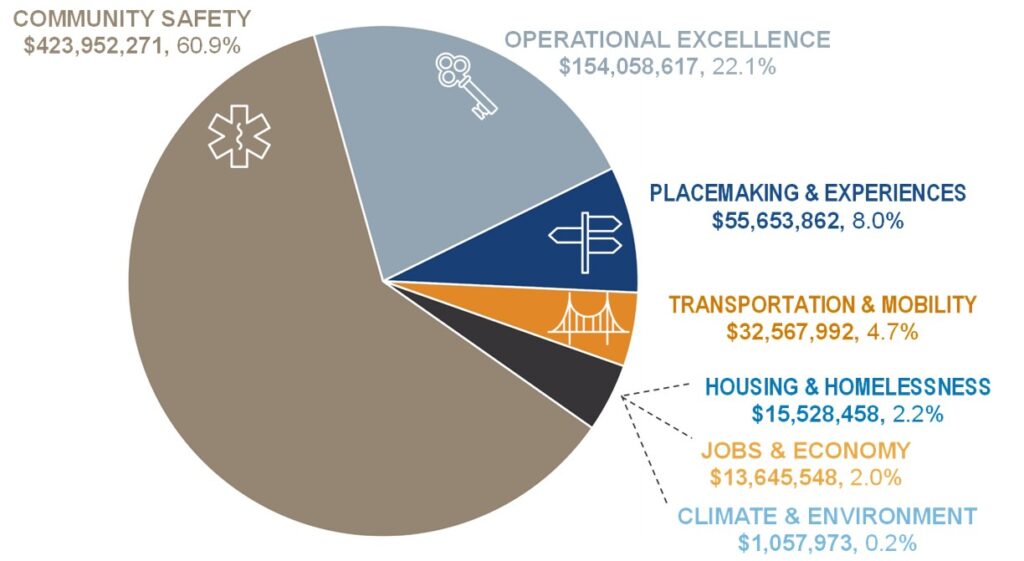
-
The proposed budget uses a combination of:
- Ongoing expenditure reductions
- Adjusted or new revenues
- Service delivery changes
- Organizational restructuring
- Partnerships and efficiencies
More than 100 positions are proposed to be eliminated, many of which are already vacant, and some services are being adjusted or gradually wound down to help the City focus on its most essential needs.
-
To focus resources on core 24/7 responders and established outreach teams, the City proposes:
- Phase out the Community Service Officers (CSO) program
- Phase out the Holistic Outreach Promoting Engagement (HOPE) team
- Reductions in contracted human services with community partners
- Ending the City’s long-standing contribution to Tacoma Farmers Markets operations (while continuing support for SNAP Market Match)
- Ceasing asphalt production at the City’s asphalt plant
- Eliminating a vacant deputy City Manager position
Individuals served by phased out programs will continue receiving services through Police and Fire.
-
Highlights include:
- Adding 12 commissioned police officers and two youth engagement officers, both through partnership with the State and Tacoma Public Schools
- Creating a stable replacement cycle for Fire Department equipment
- A one-time investment to replace a 1999 Fire ladder truck
- Maintaining homelessness and youth violence prevention programs such as HEAL, BRAYVE, Community Courts, and crisis response teams
- For Cybersecurity, we are investing $1.4 million more to protect City systems and residents’ data.
- Tidy‑Up Tacoma to provide more graffiti removal, public litter cans, bulky waste pickup, and a “Don’t Trash Tacoma” campaign.
-
The budget proposes:
- A redesigned business license fee structure keeping fees the same or lower for 80% of licensed businesses
- A new “business concierge” to help businesses navigate permitting and identify available incentives
- An additional license tier for businesses with over $5 million in annual revenue
-
A new 10% commercial parking tax is projected to raise $2.25 million per year, dedicated entirely to transportation projects such as:
- Street and sidewalk repairs
- Safe Routes to Schools improvements, such as at Arlington Elementary and Foss High School
- ADA accessibility upgrades at bus stops
- Infrastructure investments supporting housing access and equity
-
Key changes include:
- Merging Environmental Services and Public Works into one department
- Studying the use of artificial intelligence in permit review processes
- Creating a phone line with interpretation services for non-English-speaking customers
- Unifying human services, housing, and homelessness teams to improve coordination
These steps help modernize service delivery and reduce long-term costs.
-
This budget makes meaningful progress, but more work is needed. Over the next several years, the City will continue adjusting service models, updating infrastructure plans, evaluate wages and benefits for employees, and ensure our commitments match our financial capacity.
-
At the October 6 Study Session, the City Council received the City of Tacoma’s 2027–2028 Proposed Biennial Budget. View the presentation.
Department Presentations October 13 – November 3
Starting October 13, budget presentations during the City Council’s Study Sessions will begin. These noon presentations offer a deeper dive into how the proposed budget influences each of the City Council’s priority areas.
Council Study Sessions Department Presentations
- October 13: Climate & Environment and Transportation & Mobility with Tacoma Public Utilities (TPU) and Environment and Public Works (EPW)
- View the presentations: TPU and EPW
- View the EPW 2024-2025 Key Infrastructure and Accomplishments one-pager
- October 20: Placemaking & Experiences and Jobs & Economy with Community and Economic Development (CED), Planning and Development Services (PDS), and Tacoma Venues and Events (TVE)
- View the presentation
- View the TVE 2025 at a Glance and CED 2025-2026 Key Accomplishments one-pager
- October 27: Community Safety and Housing & Homelessness with Neighborhood and Community Services (NCS), Tacoma Fire Department (TFD), and Tacoma Police Department (TPD)
- November 3: Operational Excellence with Internal Services (City Manager’s Office, Finance, Human Resources, and Information Technology)
Committees of the Whole
- October 23: Council Budget Amendments
Council Meetings, Public Hearings, and Adoption
- October 27: First public hearing on the 2027–2028 proposed Biennial Budget
- November 10: Second public hearing and expected first reading of ordinance for the 2027-2028 proposed Biennial Budget
- November 17: Expected second reading of ordinance and adoption of the 2027-2028 Biennial Budget
Council Study Sessions are held on Tuesdays at noon, and Council Meetings are held on Tuesdays at 5 p.m.
They can be viewed live in person at the Tacoma Municipal Building (747 Market Street, 1st Floor, Council Chambers) or virtually on tacoma.gov/councilmeetings, TV Tacoma, and on Zoom.
TV Tacoma is currently carried on both the Lightcurve and Comcast Cable systems.
- On Lightcurve, TV Tacoma is available via cable TV on channel 512 in high definition and on channel 12 in standard definition within the Tacoma City limits and in Pierce County. In the City of University Place, our standard-definition channel is 21. TV Tacoma is also available on channel 12 with Lightcurve’s StreamTV Service.
- On Comcast, TV Tacoma is available in high definition on channel 321 in Tacoma and Pierce County. Our standard definition channel is 12 within the Tacoma City limits and channel 21 in Pierce County. TV Tacoma is not available on the Comcast system in University Place.
Full agendas, as well as Zoom access details, for Council Study Sessions and Council Meetings are available on our City Council Meetings web page.
- October 13: Climate & Environment and Transportation & Mobility with Tacoma Public Utilities (TPU) and Environment and Public Works (EPW)