SafeTREE Routes to School
Contact
Lisa Kenny
Community Trees Program Coordinator
(253) 341-1315
lkenny@tacoma.gov
Project Focus
- Community outreach & neighborhood engagement.
- In-class urban forestry lessons that connect students to the benefits of trees.
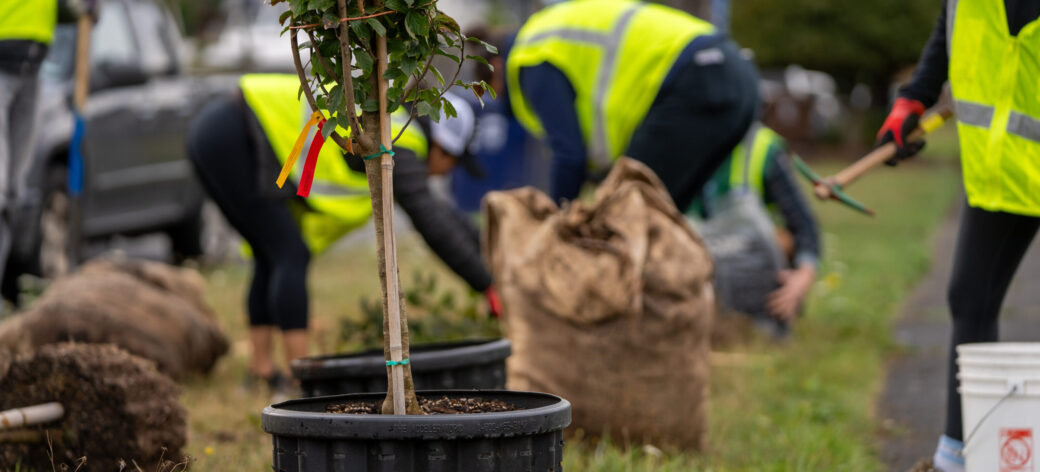
- Tree planting along suggested school walking routes.
By planting trees along designated walking routes, the project aims to increase tree canopy near schools, support neighborhood safety, and create healthier, cooler places for students and families to walk, bike, and roll to school and around their neighborhoods. Due to limited funding and project scope:
- Trees will be planted only in the public right-of-way adjacent to residential properties, along select suggested walking routes.
- Planting will only take place with property owner permission.
- Trees planted as part of this pilot project will receive supported tree watering for their first three years after planting.
In addition to planting new trees, the project also includes limited investments in existing trees along walking routes, such as tree inventories and pruning select trees in need of maintenance when funding allows.
Suggested Walking Routes
For this project, schools were selected using a combination of grant eligibility requirements and City data on tree canopy, heat, and equity to focus planting where trees can have the greatest community impact.
Suggested walking routes are mapped solely for elementary schools through the City’s Safe Routes to School (SRTS) program, however, these routes are intentionally designed to support connectivity between elementary and nearby middle schools. This project names both elementary and middle schools as our focus as they are both expected to benefit most from tree planting and outreach along walking routes.
Planting dates reflect when trees are scheduled to go in the ground. Outreach, classroom lessons, and neighborhood engagement will take place in advance of each “planting season” above. Tree walk celebrations during Earth Month (April) and/or International Walk to School Month (October) will highlight newly planted trees along routes and celebrate community participation.
Why This Project Matters
Trees are essential in Tacoma. They help cool neighborhoods, improve air quality, manage stormwater, and make streets feel safer for people walking. In Tacoma, neighborhoods with fewer trees often experience higher temperatures and fewer environmental benefits. This project is designed to help address those gaps by bringing trees to places where they can have the greatest community impact.
How Trees Support Safety and Traffic Calming
Trees do more than provide shade. Research shows that streets with trees experience lower vehicle speeds and provide traffic calming. Along school walking routes, these effects can help create safer conditions for students, families, and neighbors.
When planted along streets, they can:
- Visually narrow roadways, encouraging drivers to slow down
- Increase driver awareness of pedestrians and children
- Support existing traffic calming features like speed humps and crosswalks
In addition to safety benefits, trees along walking routes help:
- Cool neighborhoods and reduce extreme heat
- Improve air quality near schools
- Reduce stormwater runoff and pollution
Get Involved
If you are a teacher at our focus schools, and are interested in scheduling in-class urban forestry lessons please contact: envirochallenger@tacoma.gov
If you live near our focus schools and/or are interested in volunteering to support our tree planting efforts visit our partner’s web page.
Learn More
Article: DNR Tree Link News – $8 Million in Urban Forestry Grants

Funding for this project provided by the City of Tacoma and the USDA Forest Service, Urban and Community Forestry Program in partnership with State of Washington Department of Natural Resources, Urban and Community Forestry Program.