Emergency Management
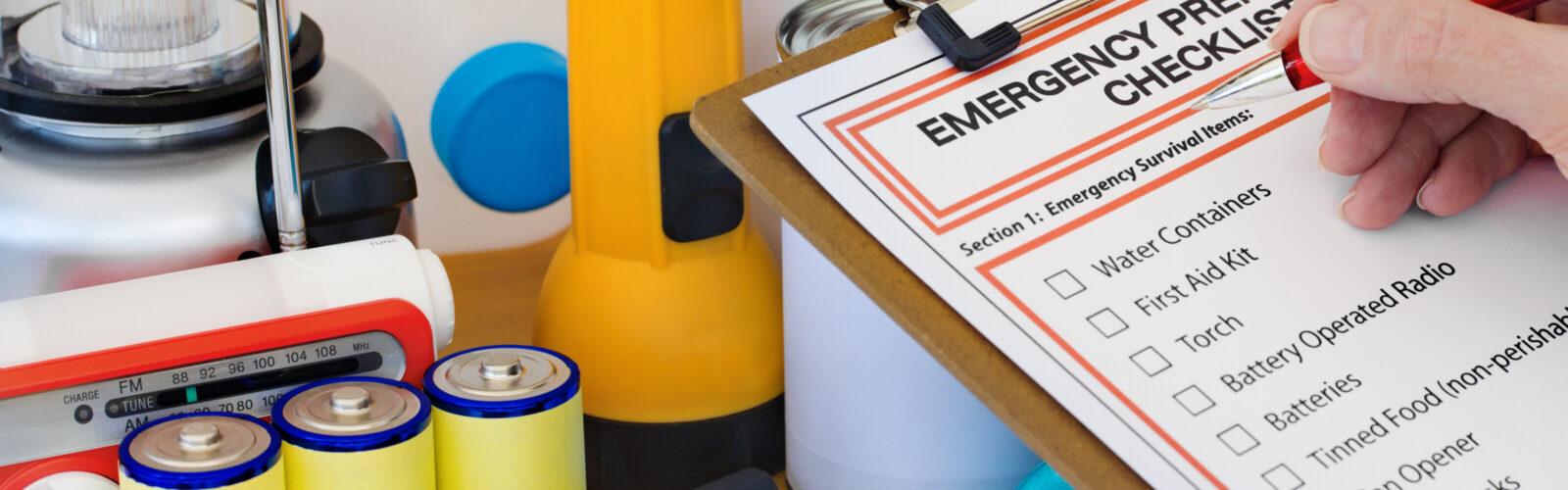
Emergencies can strike without warning, leaving us vulnerable and unprepared. Tacoma is at-risk for natural disasters such as extreme heat, ice storms, earthquakes, volcanic eruptions and more. There are steps you can take to safeguard your family and community.
 The goal of emergency management is to protect people, property, and the environment from disasters and large-scale emergencies.
Guiding principles for achieving disaster resiliency encompass the five phases of emergency management: prevention, mitigation, preparedness, response, and recovery. Each plays a crucial role in minimizing the impact of disasters and emergencies.
Learn how to take action to prepare, now and throughout the year, for emergencies that could affect where we live, work, and visit.
Tacoma Community Emergency Response Team (CERT)
-
Ready to learn what it takes to join CERT? Registration is open for our fall course!
Please note that final certification requires your attendance at ALL classes listed below. Pre-registration is required.
Classes are on the following Tuesdays and Thursdays, 6 PM to 9 PM:
October 20, 22, 27, 29
November 3, 5Disaster Simulation Final:
Saturday, November 7
9 AM – 3 PMLocation: Tacoma Fire Department Training Division (2124 Marshall Ave, Tacoma, WA 98421)
Registration link: https://app.smartsheet.com/b/form/019ff27ba8f1760e9cf426ee3e02f443
-
The Community Emergency Response Team (CERT) is a Federal Emergency Management Agency (FEMA) program that educates community members about disaster preparedness for the hazards that may impact their area and trains them in basic disaster response skills, such as fire safety, light search and rescue, team organization, and disaster medical operations. CERT members are trained to safely respond to emergencies on the family, neighborhood, and community levels and can help when first responders are unavailable. CERT members also are encouraged to support emergency response agencies by taking a more active role in emergency preparedness projects in their community.
-
The City of Tacoma CERT is a volunteer program providing free emergency response training for community members. Skilled professionals teach you these skills both online and in-person.
Our CERT program is available to residents of Pierce County who live in and around Tacoma.
Please note that Pierce County has three CERT programs: Tacoma, Puyallup, and University Place. Please choose the CERT location closest to you if you live outside of these cities.
Request information about Tacoma CERT classes
Sign up for our Fall CERT course!
Tuesdays and Thursdays, 6 PM – 9 PM
October 20 – November 5
Disaster Simulation on November 7, 9 AM – 3 PM -
City of Tacoma’s CERT Program Pathways
There are three different pathways that a volunteer can choose from. Each option requires a different set of requirements beyond the CERT basic course: CERT Team Volunteer, CERT Team Leader, and CERT Section Chief.
Background checks will be conducted for all volunteers participating in the CERT program. Team members are encouraged to take AED training, basic first aid, and CPR.
Choose your preferred level of involvement with the options below!
CERT Team Volunteer
The Community Emergency Response Team (CERT) Volunteer is a voluntary CERT member trained in basic disaster response skills, such as fire safety, light search and rescue, team organization, or disaster medical operations.
Team volunteers must have Type 1 and Type 2 skills.*
*Type 2 training requirements include IS 100, IS 200, IS 700, IS 800, and the CERT Basic course.
*Type 1 training requires all courses from Type 2 plus additional supplemental training.
Response Team (RT) Team Leader
The Community Emergency Response Team (CERT) Team Leader is a volunteer who is part of a CERT and directs team activities.
Team Leaders must have Type 1 and Type 2 skills.**
**Type 2 requirements include the following training: IS 240, IS 241, IS 242, IS 1300, IS 2200, G427- CERT Program Manager Course, and the CERT Basic course.
**Type 1 requires all courses from Type 2 plus additional supplemental training.
CERT Section Chief
The Community Emergency Response Team (CERT) Section Chief is a volunteer responsible for a specific functional area within the CERT.
The CERT Section Chief requires the following training: IS 100, IS 200, IS 244, IS 288, IS 315, IS 505, IS 700, IS 703, IS 800, and the CERT Basic course.
-
What Will You Learn?
- Disaster Preparedness: How to prepare yourselves and your neighborhoods for the various hazards that may occur.
- Team Organization and Disaster Psychology: This course addresses the organization and management principles necessary for a CERT to operate successfully. It also covers critical incident stress for victims and emergency workers.
- Medical Operations: How to conduct triage, establish medical treatment areas, and provide basic first aid for victims.
- Damage Assessment: How to rapidly assess damage employing a standardized format used throughout the county.
- Fire Suppression: Using fire extinguishers and other equipment to suppress small fires.
- Light Search and Rescue: How to perform light search and rescue planning, techniques, and rescuer safety.
- Terrorism and CERT: Describe the action following a suspected terrorist incident.
- Disaster Simulation: A small-scale disaster simulation located at the City of Tacoma Fire Department Training Center (2124 Marshall Ave., Tacoma, WA 98421), where you get to put the skills you learned throughout the course to the test – with the help of trained professionals (firefighters, police officers, utility professionals, and more).
About the Course
The basic CERT training course is required for volunteers who want to become certified members of our team and if you would like to be considered for deployment during an emergency. The training includes all the basic skills to get you started with the team. Participants must complete in-person, hands-on training to receive their CERT course completion certificate. The three-week in-person training program will occur two days a week, from 6-9 p.m. The course includes a disaster simulation exercise on the final Saturday. This training course is available twice a year.
Not sure if you want to commit to the team? That’s okay, too! Our CERT basic training course is open to anyone who wants to learn more about disaster preparedness! The classes follow standard models developed by FEMA and are offered in cities across the United States. Aimed at equipping our community to prepare for and respond to potential disasters in our area, this model teaches neighborhood residents how to help each other in the first few minutes, hours, or days following a disaster – before emergency responders can render professional help.
Air Quality and Wildfire Smoke
Hotter, drier and longer summers in the Pacific Northwest are linked to climate change and those conditions are causing larger and more frequent wildfires. The smoke from wildfires reduces visibility and creates outdoor air quality issues that can affect people’s health. Talk with your health care provider about how to protect yourself if you have respiratory or circulatory illnesses due to air quality issues. If you have shortness of breath, wheezing, chest pain, heart palpitations, extreme fatigue or difficulty moving, contact your healthcare provider immediately or call 911.
If you have questions about lung health, managing asthma or allergies or for air quality issues you can call the American Lung Association’s Lung HelpLine at 1-800-LUNGUSA (1-800-586-4872) Monday through Friday 5 a.m. to 7 p.m. and weekends 9 a.m. to 5 p.m. Staff will respond to messages left after hours the next business day.
Local Smoke Alerts
The smoke generated from a structure fire contains various toxic gases and harmful substances, depending on the burned materials. Assume that ALL smoke is dangerous and should be avoided whenever possible. Smoke Alerts serve as a tool to warn those nearby that a significant fire is producing hazardous smoke, prompting appropriate actions.
Frequently Asked Questions
-
A smoke alert signifies a hazard in your area that requires attention. Here is a sample smoke alert message: “This message is from the Tacoma Fire Department: Please be advised. Smoke may be present in your area due to a large fire currently burning at [location]. We recommend staying indoors, closing your windows, and avoiding the smoke if possible, especially for those that have respiratory sensitivities. If you are experiencing prolonged smoky conditions that are affecting your breathing, you should relocated to a public space or the home of a family member or friend where the smoke is not a problem. If you are unable to relocate to a smoke free area, please call 9-1-1 for assistance.”
-
The decision depends on how close you are to the fire and the amount of smoke in your indoor space. Tips from the Puget Sound Clean Air Agency and the Washington State Department of Health, such as turning off your furnace/air intake systems, establishing a clean room, creating a DIY air filter, or relocating to a smoke-free environment, can help mitigate the effects of light smoke. If smoke conditions are dangerous and you need assistance relocating, call 911.
-
The Tacoma Fire Department (TFD) utilizes air monitoring equipment to assess toxic chemical levels during a fire incident. An evacuation order may be issued if detected toxins reach severe levels. When preparing to evacuate, consider the Five Ps of Evacuation for wildfires and significant fire events: (ready.gov)
- People: Ensure the safety of individuals, pets, and other animals if possible.
- Prescriptions: Gather medications, dosages, medical equipment, batteries, power cords, eyeglasses, and hearing aids.
- Papers: Secure important documents in hard or electronic copies on external hard drives or thumb drives.
- Personal needs: Pack clothes, food, water, a first aid kit, cash, phones, chargers, and items for individuals with disabilities or special needs.
- Priceless items: Include pictures, irreplaceable mementos, and valuables.
Contact
For emergencies, call 9-1-1